













July 15, 2026
Battery Energy Throughput vs Cycle Life: How to Measure Real Battery Lifespan
Share my #SolaXStory


Why do two batteries with the same 10‑year warranty perform so differently? Why does one reach battery end of life in year 6, while another lasts 12 years? The answer often isn't in the battery warranty years — or even in the advertised battery cycle life.
For decades, we've relied on cycle life to judge a battery's lifespan. Numbers like 4,000 or 6,000 cycles sound impressive. But cycle life only tells you how many charge‑discharge events a battery can complete under test conditions. It doesn't show how much total energy the battery will actually deliver before it degrades.
That's where battery energy throughput comes in.
In this guide, we'll break down what battery energy throughput really means, how to calculate it, and why it matters more than cycle count alone.

What is Throughput in Batteries?
Battery throughput (or energy throughput) is the total amount of energy a battery can charge and discharge over its entire lifetime, usually measured in kWh or MWh.
If cycle life counts the number of trips, energy throughput is the mileage.
And when comparing lithium battery life cycle, LiFePO4 cycle life, or any high cycle life battery, throughput is often the more accurate measure of real-world value.
Throughput vs. Cycle Life: What's the Difference?
The key difference becomes clear when you consider battery degradation.
Battery capacity does not decline in a perfectly straight line. Most lithium batteries experience a small drop in the first year, then a relatively stable period, followed by faster decline near the end of life. That means a 10 kWh battery may deliver close to 10 kWh per cycle early on, around 8 kWh mid-life, and perhaps only 6 kWh per cycle in its final stage.
If you only look at 6,000 cycles, you're assuming each cycle delivers the same energy — which isn't realistic. Throughput captures the actual accumulated energy output, not just the repetition count.
Depth of Discharge (DoD) further complicates cycle comparisons. A battery rated for 10,000 cycles at 50% DoD may actually deliver a similar or even lower lifetime energy total than one rated for 6,000 cycles at 80% DoD. Higher cycle numbers don't automatically mean more usable energy over time.
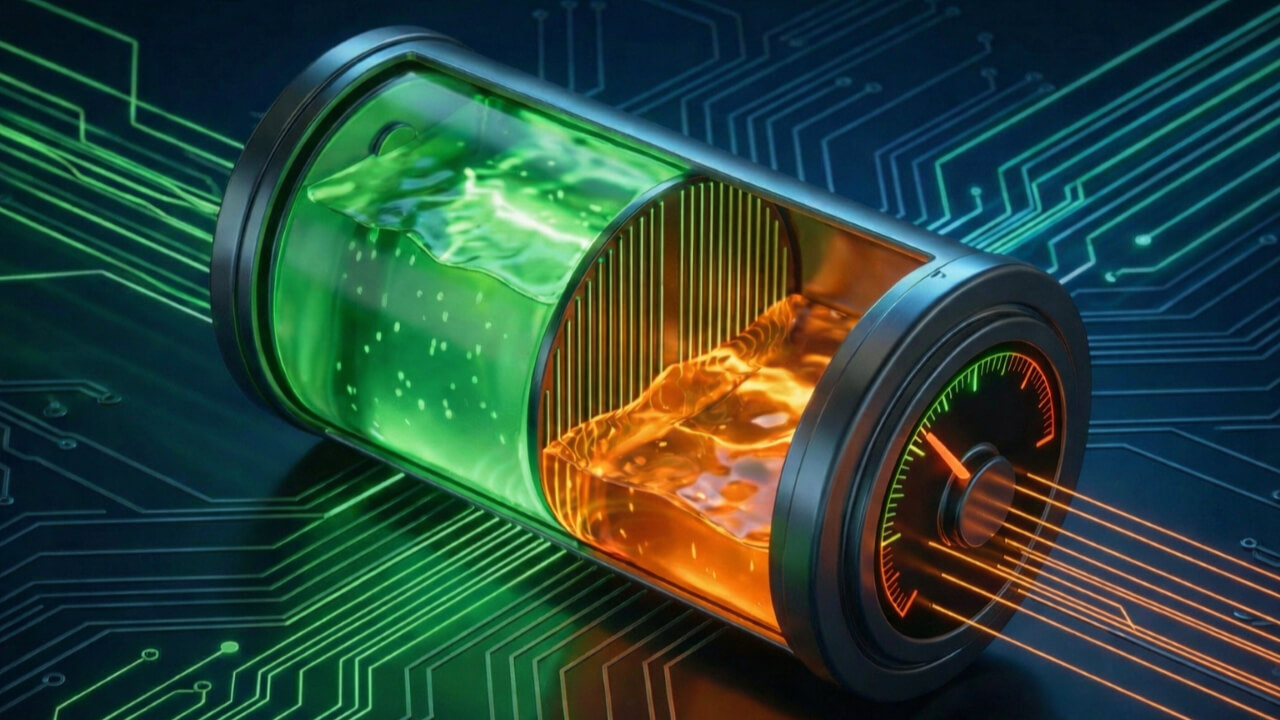
That's why throughput provides a fairer way to compare lithium battery life cycle, LiFePO4 cycle life, or any high cycle life battery operating under different conditions.
How to Calculate Battery Energy Throughput?
Battery energy throughput can be estimated using a practical formula:
Throughput (kWh) = Nominal Capacity × Cycle Life × Depth of Discharge (DoD) × Efficiency
Where:
Nominal Capacity = rated battery capacity (kWh)
Cycle Life = total number of charge–discharge cycles
DoD = usable percentage per cycle
Efficiency = round‑trip efficiency
This gives you the total lifetime energy a battery can realistically deliver.
Case Study: LFP vs. Lead-Acid
To see the real-world impact of throughput, let's compare two batteries with the same 10 kWh nominal capacity:
Specification | LFP (LiFePO4) Battery | Lead-Acid (Deep Cycle) |
Nominal Capacity | 10 kWh | 10 kWh |
Cycle Life | 6,000 cycles | 1,000 cycles |
Depth of Discharge (DoD) | 90% | 50% |
Efficiency | 95% | 85% |
Total Lifetime Throughput | 51.3 MWh (51,300 kWh) | 4.25 MWh (4,250 kWh) |
Even though both batteries are rated at 10 kWh, the LFP battery can deliver more than 12 times the lifetime energy of the lead-acid battery.
This explains why LiFePO4 batteries often have a higher upfront cost but a much lower lifecycle cost per kWh delivered. When you divide purchase price by total lifetime throughput, LFP typically provides far better long-term value.
In other words, the real comparison isn't just capacity or cycle count — it's total energy delivered over the battery's life.
Why Businesses and Solar Owners Should Care Throughput?
For businesses and solar system owners, battery performance isn't just technical — it's financial. Energy throughput directly determines how much usable energy you'll get back from your investment.
A battery with higher throughput:
Delivers more total kWh over its lifetime
Generates more savings from peak shaving or load shifting
Improves return on investment (ROI)
Lowers lifetime cost per kWh delivered
For solar owners, throughput affects how much self-generated solar energy you can actually store and use over 10–15 years. A battery with limited throughput may hit its warranty cap long before the time period ends — reducing long-term savings.
For businesses, the impact is even bigger. Commercial systems often cycle daily for:
Peak demand reduction
Time-of-use arbitrage
Backup power readiness
EV fleet charging
In these cases, batteries can reach their throughput limit years before the warranty expires. That means the real question isn't "How many years is the warranty?" but: How much total energy will this battery deliver before it reaches end of life?
Ultimately, throughput translates battery specs into something that matters: total lifetime energy output — and total lifetime value.
Conclusion: Choosing Your Next Battery
When choosing your next battery, don't focus only on the warranty years.
A "10‑year warranty" sounds reassuring — but many battery warranties end when the system reaches its throughput limit, even if the time period hasn't expired. If your battery cycles frequently, you could hit that limit years earlier than expected.
Before buying, always check:
The maximum energy throughput (kWh or MWh) covered in the warranty
The end‑of‑life capacity threshold (60%, 70%, or 80%)
Whether the warranty ends when time or throughput is reached first
The smartest buyers don't just ask, "How long is the warranty?"
They ask: How much total energy will this battery deliver over its lifetime?
Because in the end, battery value ist't measured in years — it's measured in total energy delivered.
FAQ
Table of Contents
Latest News
Explore expert insights, practical guides, and the latest news on SolaX Power.


To the Latest Newsletter
Stay Ahead with the Latest SolaX Updates!
Subscribe
I have read and agree to Privacy Policy and User Terms