













June 25, 2026
How Long Do Solar Batteries Last? Solar Battery Lifespan Guide
Share my #SolaXStory


Many homeowners begin asking the same questions after installing energy storage: how long do home solar batteries last? And how often do solar batteries need to be replaced?
The average life of solar batteries is typically 10–15 years, which means most systems will require one battery replacement during a standard 25-year solar panel lifespan.
But here's what most guides don't clearly explain: some batteries last closer to 8 years, while others exceed 15 — and the difference often comes down to a few controllable factors.
In this guide, we'll break down exactly how long solar batteries last, what shortens their life, and how to make yours last as long as possible.
The 3 Key Metrics for Solar Battery Lifespan
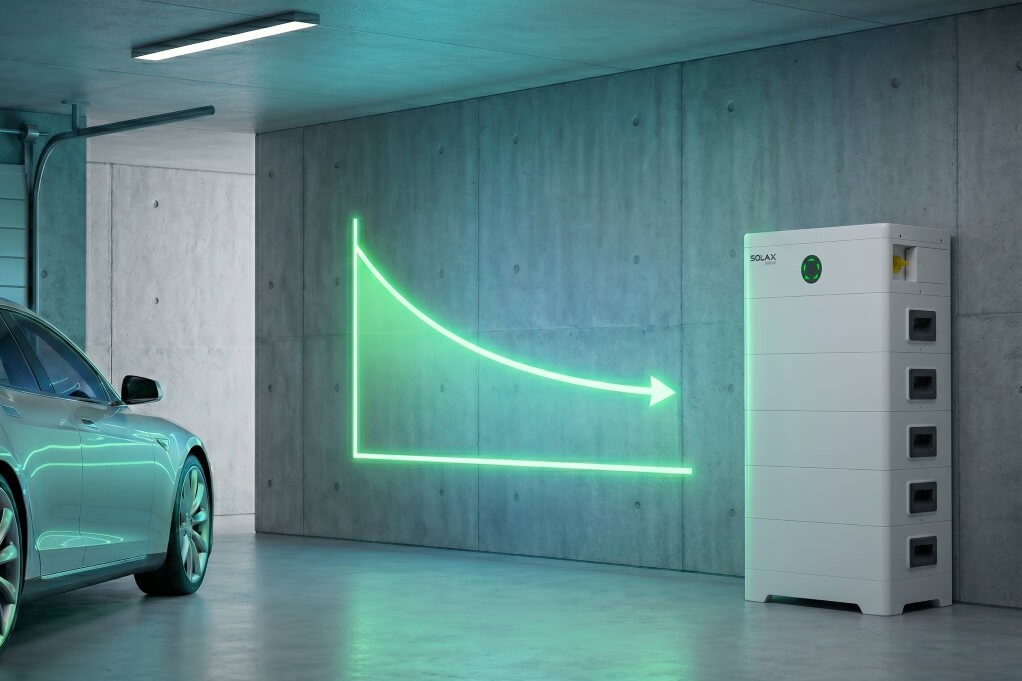
The lifespan of a solar battery is not determined by years alone. It depends on several measurable performance indicators — especially battery chemistry, capacity retention and cycle life.
Your battery's chemistry sets the potential, but your daily habits determine the reality.
Battery Chemistry: The Foundation of Longevity
The most significant factor in solar battery lifespan is the chemical composition of the cells. Different chemistries handle heat and repetitive charging differently.
Battery Chemistry | Real-World Lifespan | Best Use Case | |
Lithium Iron Phosphate (LFP) | 10 - 15+ Years | 90% - 100% | Daily cycling, high-efficiency home backup. |
Lithium NMC | 8 - 12 Years | 80% - 90% | Space-saving installs (higher energy density). |
Lead-Acid (AGM/Gel) | 3 - 5 Years | 50% | Emergency backup only; off-grid cabins. |
LFP (LiFePO4): This is the gold standard for modern residential systems. It is chemically stable and can withstand high temperatures, which significantly boosts its solar battery lifetime.
Lead-Acid: While cheaper upfront, their short lead acid solar battery lifespan usually requires 3 replacements for every 1 lithium battery install.
Capacity Retention: The "70% Rule"
Just like a smartphone battery that starts to "drain faster" after two years, solar batteries experience Capacity Fade.
In practical terms, a solar battery is generally considered to have reached the end of its lifespan when its usable battery capacity drops to 70% of its original rating.
At 100% Capacity: Your battery can power your fridge, WiFi, and lights for 24 hours.
At 70% Capacity (End of Life): That same battery might only provide 16 hours of backup.
At this stage, the battery isn't "broken"—it still operates and stores energy. However, it may no longer provide reliable whole-home backup power or the same level of energy independence as when it was new. For many homeowners, this is the signal that it is time to plan a replacement.
Cycle Life: The "Odometer" of Your Battery
If years are the age of the battery, Cycle Life is the mileage. One "cycle" is defined as a full discharge (using the energy) followed by a full recharge.
Most high-quality lithium ion solar battery lifespan ratings are between 4,000 and 8,000 cycles.
If you cycle your battery once per day (charging via solar by day, discharging at night), your battery will last 11 to 20+ years.
If your system is configured for aggressive "Time-of-Use" shifting where you cycle the battery twice per day, the solar battery lifetime could drop to 6–8 years.
Featured Snippet Tip: When comparing brands, always check the Warranty Throughput. A manufacturer might offer a "10-year warranty", but if you exceed their cycle limit (e.g., 3,000 cycles) before 10 years are up, your battery warranty may expire early.
How Often Do Solar Batteries Need to Be Replaced?
Now that you understand what determines lifespan, let's look at how that plays out in real-world usage.
Scenario 1: You Live in the City and Only Use the Battery for Backup
You're grid-connected. The power rarely goes out.
Your battery mostly sits there quietly, fully charged, waiting for an outage. In this case:
The battery cycles very little
It may only discharge a few times per year
Degradation happens slowly
Replacement timeline: 15+ years
In fact, many backup-only systems outlast their 10-year warranty because they simply aren't stressed very often.
Scenario 2: You Use Solar Every Day to Offset Your Nighttime Bills
This is the most common residential setup.
Your solar panels charge the battery during the day.
At night, your home runs on stored energy. That means:
About 1 cycle per day, roughly 365 cycles per year
Around 4,000–6,000 cycles over its lifetime
Replacement timeline: 12–15 years
Most homeowners in this category will replace their battery once during the 25-year life of their solar panels.
Scenario 3: You Live Off-Grid and Rely on Batteries Daily
Now imagine you're fully off-grid. Your battery runs the fridge, lights, internet, and maybe even a well pump or AC every single day. In this case, the battery discharges more deeply, may cycle more than once per day, and high loads increase internal stress—shortening its overall lifespan.
Replacement timeline: 8–12 years
3 Signs That You Need to Replace Your Solar Battery
Your battery won't simply explode or stop working on its 10th birthday. Instead, it will give you subtle signals that it's time to look for a replacement. Here are the red flags to watch for:
Shrinking Backup Time
This is the most obvious sign. If your battery used to power your home for 12 hours during a blackout but now struggles to hit 6 hours under the same load, its usable capacity has significantly faded.
Sluggish Charging
As internal resistance builds up due to age, the battery becomes less efficient. You may notice it takes much longer to reach 100% charge from your solar panels than it did in the first few years.
BMS Red Flags
Modern systems are equipped with advanced Battery Management Systems (BMS). If your monitoring app starts showing frequent "Cell Imbalance", "High Internal Resistance", or recurring error codes, the hardware is struggling to maintain stability.
Important Note on Warranties: Most manufacturers offer a 10-year warranty simply guarantees 70% capacity retention — it's not an expiration date.
If your battery hits Year 11 and you are happy with its reduced capacity, you don't need to replace it. However, once capacity drops below 60%, the reliability for emergency backup becomes too low for most households.
How to Extend Your Solar Battery Lifespan?
You can't stop time, but you can certainly slow down battery degradation. To squeeze an extra 3–5 years out of your investment, follow these pro-active maintenance tips:
Set a 10–20% Reserve SoC
Never let your battery hit a true 0% charge. Configure your system to maintain a "State of Charge" (SoC) reserve of 10–20%. Deep discharges are chemically traumatic for lithium cells and significantly accelerate wear.
Optimize the Environment
Temperature is the #1 enemy of battery health. Install your unit in a cool, indoor area (like a garage or utility room) or a well-ventilated, shaded outdoor spot. Avoid west-facing walls where direct afternoon sun can cook the internal components.
Manage Your Load Intensity
Avoid running multiple high-power appliances simultaneously (e.g., EV charger, dryer, and electric stove) while on battery power. High-amperage draws create internal heat and stress; staggering your loads keeps the battery "cool" and healthy.
Keep Firmware Updated
Modern batteries are software-driven. Regularly updating your system's firmware ensures the Battery Management System (BMS) is using the latest algorithms to balance cells and optimize charging efficiency.
Ensure Perfect Inverter Compatibility
A mismatched inverter can lead to poor communication and inefficient charging cycles. Using a matched system—SolaX's All-in-One solutions are pre-optimized, ensuring the inverter and battery speak the same 'language' to prevent accidental cell stress.
Is It Worth Replacing a Solar Battery After 10 Years?
By the time your battery reaches its 10th anniversary, you might wonder if it's worth buying a new one. To find the answer, let's look at the "hard math" of energy storage.
Assume a typical high-quality lithium-ion install:
Upfront Battery Cost: ~$10,000
Annual Electricity Savings: ~$1,200 (by avoiding peak utility rates)
10-Year Total Savings: $12,000
In this conservative scenario, the battery not only pays for itself but generates a $2,000 net gain within 10 years.
This calculation also assumes electricity prices remain flat—which is unlikely. Utility rates historically rise by 3–5% per year. As grid prices increase, each kilowatt-hour stored becomes more valuable, meaning your annual savings could grow from $1,200 to $1,500 or more over time, accelerating your return on investment.
Replacing your battery is not just a maintenance expense—it's a continued investment in energy independence and long-term cost stability.
Ready to Secure Your Energy Future?
Not sure if your current system is due for an upgrade? Or are you ready to configure a high-longevity SolaX energy storage solution designed to go the distance?
Don't leave your energy independence to chance. Contact our experts today for a free assessment and ensure your home stays powered for years to come.
FAQ
Table of Contents
Latest News
Explore expert insights, practical guides, and the latest news on SolaX Power.


To the Latest Newsletter
Stay Ahead with the Latest SolaX Updates!
Subscribe
I have read and agree to Privacy Policy and User Terms