












June 15, 2026
Is Your Solar Setup Weatherproof? The Ultimate IP Rating Guide
Share my #SolaXStory


The primary role of an ingress protection rating (IP rating) is simple: to protect delicate internal electronics from harsh external environments.
Choosing the right protection level directly extends the lifespan of your equipment. It prevents dust from causing overheating and short circuits, while stopping moisture from triggering internal corrosion or fatal thermal runaway in lithium batteries.
To secure your system, this guide will cut to the chase and help you:
Understand the clear ingress protection definition.
Compare the drastically different IP code requirements between inverters and batteries.
Find the exact IP rating match for your specific installation scenario.
What is the Ingress Protection Meaning and Standard?
IP stands for Ingress Protection. It is a standardized rating system defined by IEC 60529 to classify how well electrical equipment is protected against solids (dust) and liquids (water).
An IP rating always consists of two digits:
First Digit: Protection Against Dust (0–6)
This number indicates resistance to solid particles.
Level | Protection Description |
0 | No protection |
2 | Protection against fingers or large objects |
5 | Dust protected (limited dust allowed) |
6 | Dust-tight (complete protection) |
For solar inverters and battery storage systems, the most common levels are:
2 (basic indoor protection)
6 (fully dust-tight for outdoor use)
Second Digit: Protection Against Water (0–8)
This number indicates resistance to moisture and water exposure.
Level | Protection Description |
0 | No protection |
4 | Protection against splashing water |
5 | Protection against low-pressure water jets |
6 | Protection against powerful water jets |
7 | Protection against temporary immersion (up to 1 meter) |
8 | Protection against continuous immersion |
For outdoor solar systems, Levels 5, 6, or 7 are most relevant.
Example: What Does IP65 Mean?
IP65 =
6 → Completely dust-tight
5 → Protected against low-pressure water jets from any direction
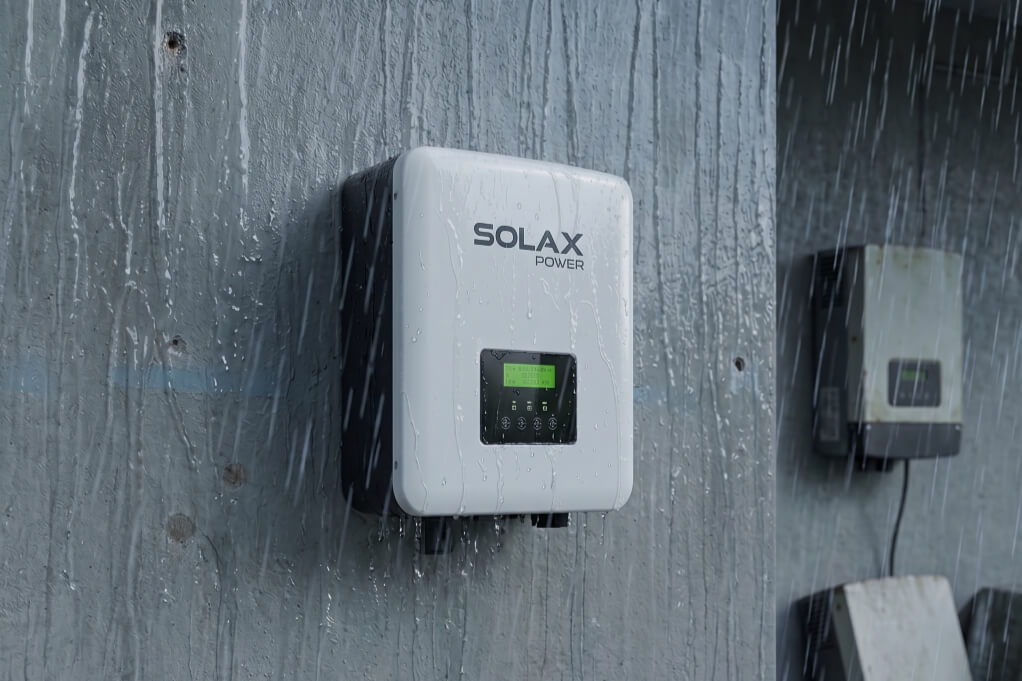
This means an IP65 inverter or battery can safely withstand rain and dusty outdoor environments, but it is not designed for submersion in water.
Common IP Protection Classes for Solar Equipment
In solar systems, the required IP protection class depends entirely on the installation environment. Below are the most common IP enclosure ratings used for inverters and battery storage.
IP20 / IP21 – Indoor Use Only
Basic protection against accidental contact and large solid objects
No meaningful waterproof capability
Suitable for:
Indoor electrical rooms
Control cabinets
Wall-mounted indoor batteries
An IP20 inverter IP code is not suitable for outdoor exposure.
IP54 – Semi-Outdoor Protection
Dust protected (limited dust ingress allowed)
Protected against splashing water
Suitable for:
Garages
Covered balconies
Under eaves or carports
IP54 works in sheltered environments but should not be exposed to direct heavy rain.
IP65 – Industry Standard for Outdoor Solar
Dust-tight (complete protection)
Protected against low-pressure water jets from any direction
This is the most common IP65 solar inverter rating in the market.
Suitable for:
Exterior walls
Rooftop installations
Fully outdoor residential systems
IP65 is the default choice for outdoor solar inverters.
IP66 – Heavy Rain & High-Pressure Water
Dust-tight
Protected against powerful water jets
Recommended for:
Coastal areas
Industrial sites
Locations where equipment may be cleaned with a hose
IP67 – Temporary Immersion Protection
Dust-tight
Protected against temporary immersion (up to 1 meter for 30 minutes)
Often used for:
Marine systems
RV installations
Off-grid mobile setups
Understanding the IP67 rating meaning is critical for environments where equipment may face flooding or standing water.
Inverter vs. Battery: Are Their IP Requirements the Same?
No. Although both are part of the same solar system, inverters and batteries have different risk profiles and enclosure design priorities.
Inverters: Easier to Achieve High IP Ratings
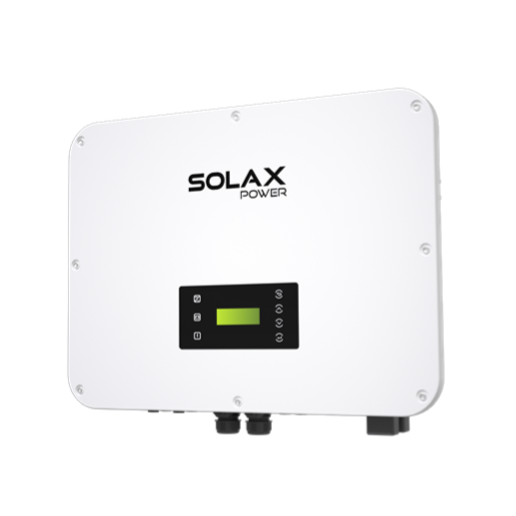
Most modern outdoor solar inverters are designed with IP65 as a standard inverter IP rating, and some models reach IP66.
If water enters an inverter, the typical result is:
Short circuit
System shutdown
PCB or component damage
In most cases, the issue is limited to hardware replacement. While costly, it is usually not a severe safety hazard.
Because inverters rely mainly on heat sinks and sealed enclosures, achieving high dustproof and waterproof performance is technically straightforward.
Batteries: Higher Risk, More Design Constraints
Battery IP rating requirements are more complex.
If water penetrates a lithium battery system, consequences may include:
Internal short circuit
Electrochemical instability
Thermal runaway
Fire risk
Unlike inverters, battery failure can escalate into a serious safety event.
At the same time, batteries require active or passive thermal management. Many indoor wall-mounted batteries rely on ventilation for heat dissipation, which limits their enclosure sealing. As a result:
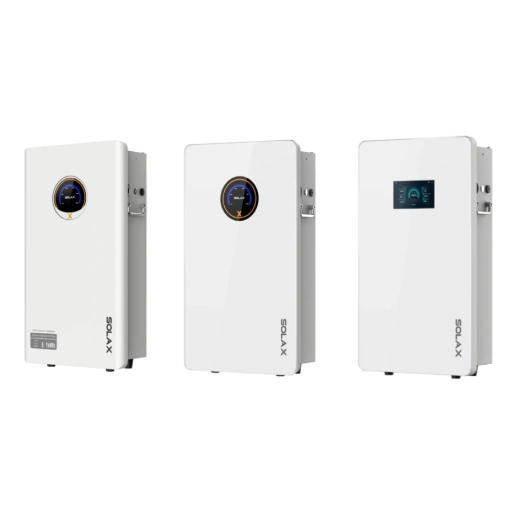
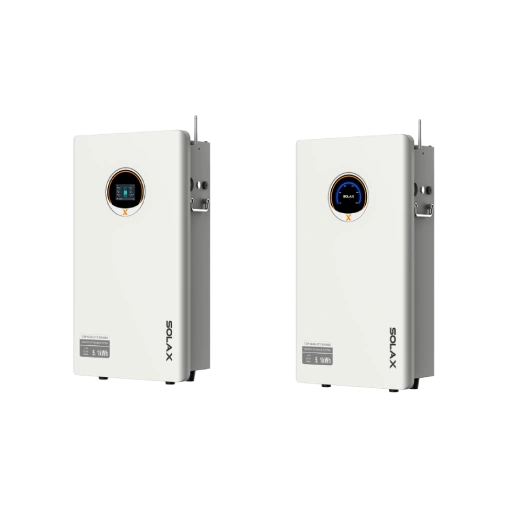
Many indoor batteries are rated IP20 or IP54
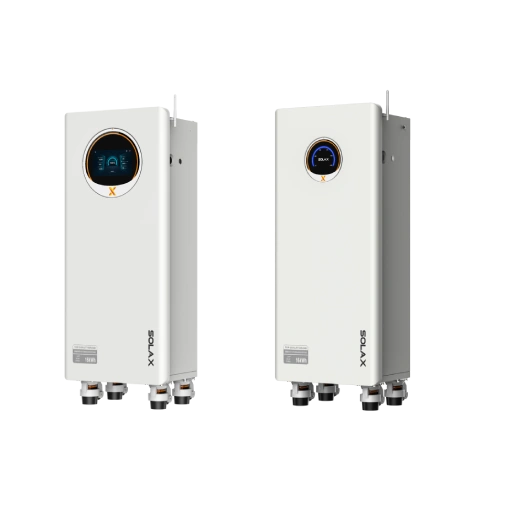
Achieving true outdoor IP65 battery storage requires sealed cabinet design and higher manufacturing cost
Key Takeaway: An IP65 inverter does not automatically mean the battery should have the same rating. For outdoor installations, battery protection should be treated more conservatively due to the higher safety risk.
Recommended IP Ratings by Installation Scenarios
Choosing the correct ingress protection level depends primarily on installation location. Below is a practical selection guide for common solar and storage setups.
Scenario 1: Indoor (Garage, Basement, Utility Room)
Inverter: IP20–IP65
Battery: IP20 is sufficient
Indoor environments are protected from rain and direct moisture. Basic dust protection is usually enough. This is the most cost-effective configuration.
Scenario 2: Semi-Outdoor (Under Eaves, Carport, Covered Balcony)
Inverter: IP65
Battery: IP54 or higher
Although not directly exposed to heavy rain, equipment may still face:
Wind-driven rain
Splashing water
Morning condensation
IP54 provides splash resistance, while IP65 offers additional safety margin.
Scenario 3: Fully Outdoor (Exposed to Rain, Snow, Dust)
Inverter: IP65 or IP66
Battery: Minimum IP65
Outdoor installations require complete dust protection and resistance to rain from all directions.
Important: A battery rated below IP65 should never be installed fully exposed outdoors. Water ingress in lithium battery systems can create serious safety hazards.
Scenario 4: Marine & Mobile Off-Grid (RV, Boats, Coastal Use)
Inverter: IP65 or higher
Battery: IP67 preferred
In marine and vehicle applications, temporary water immersion is a realistic risk. Understanding the IP67 rating meaning is critical in these environments, as IP67 equipment can withstand short-term submersion (typically up to 1 meter for 30 minutes).
Key Factors Beyond Ingress Protection Level
In real-world installations, selecting the correct ingress protection level is important — but it is not sufficient on its own. Long-term reliability depends on additional environmental and design considerations.
Below are four critical factors often overlooked during system planning.
1. Flooding Risk & Installation Height
Even if you install an IP65 hybrid inverter and an IP65-rated battery, neither device is designed to sit in standing water.
IP65 protects against water jets — not submersion.
Best practice:
Install equipment on a raised plinth or bracket
Maintain at least 30 cm (12 inches) clearance above ground
Avoid low points where water may accumulate
Flood-prone regions should consider IP67-rated equipment or elevated wall-mounted systems.
2. Cooling Mechanism & Sealing Trade-Off
Higher IP ratings often require sealed enclosures. Many IP65 inverters use:
Passive cooling (heat sinks)
Fanless designs
In contrast, lower-IP devices may use active cooling with ventilation openings.
Important consideration:
Fan-based systems are more vulnerable to dust accumulation
Air filters require periodic maintenance
Poor airflow can cause overheating over time
Sealing improves protection, but cooling design must still match the operating environment.
3. Temperature Extremes
An IP rating only measures protection against dust and water.
It does not indicate temperature tolerance. Outdoor battery systems must be evaluated for:
High ambient heat
Freezing conditions
In cold climates, lithium batteries should include:
Integrated self-heating function
Low-temperature charge protection
Without proper thermal management, performance degradation or charging restrictions may occur even with a high IP rating.
4. Cleaning Method & Water Pressure
In agricultural, industrial, or coastal environments, equipment may be cleaned using water hoses.
If high-pressure washing is expected, IP65 may not be sufficient, IP66 is recommended.
IP66 provides resistance against powerful water jets, offering additional safety margin during routine cleaning.
Practical Insight
A proper installation considers:
IP rating
Elevation and drainage
Thermal management
Maintenance practices
Selecting equipment based solely on ingress protection level without evaluating real environmental conditions can reduce system lifespan.
IP Rating vs NEMA Rating
If you are a North American customer, you may encounter NEMA ratings instead of IP ratings.
When comparing ip rating vs nema, the key difference is that IP is an international standard (IEC 60529), while NEMA (National Electrical Manufacturers Association) is a North American standard. Furthermore, ip versus nema testing differs because NEMA also evaluates factors like corrosion resistance and ice protection, which IP ratings do not cover.
Quick Conversion Between IP and NEMA Rating
IP Rating | NEMA Equivalent | Environment |
IP20 | NEMA 1 | Indoor |
IP54 | NEMA 3 / 3S | Sheltered Outdoor |
IP65 | NEMA 4 / 4X | Standard Outdoor |
IP66 | NEMA 4X | Heavy Wash-down / Coasta |
Note: An IP65 rating is roughly equivalent to NEMA 4 or NEMA 4X. The "X" in NEMA 4X indicates that the enclosure is also tested for corrosion resistance, making it ideal for coastal areas with salty air.
FAQ
Table of Contents
Latest News
Explore expert insights, practical guides, and the latest news on SolaX Power.

To the Latest Newsletter
Stay Ahead with the Latest SolaX Updates!
Subscribe
I have read and agree to Privacy Policy and User Terms