











August 11, 2026
Best Solar Micro Inverters Review: From 400W to 2000W Solutions for Homeowners
Share my #SolaXStory


Choosing a microinverter for solar panels starts with panel compatibility, not brand name or maximum output alone. The right model must support the panel's voltage and current, provide suitable AC output, and meet local grid requirements.
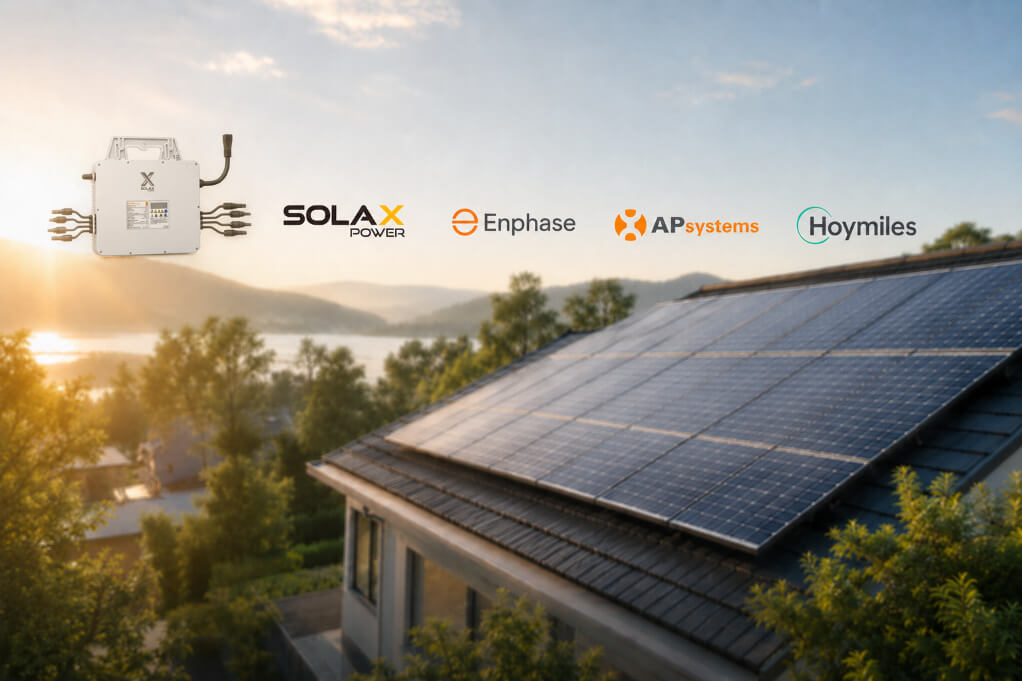
For most homes, a 400W microinverter supports one panel, an 800W to 1200W model supports two, and a 1600W to 2000W microinverter supports four. SolaX, Enphase, APsystems and Hoymiles are among the most widely compared micro inverter brands, but each is designed for different system priorities.
Quick Answer: What Is the Best Micro Inverter?
There is no single best micro inverter for every home.
SolaX is a strong choice for high-power panels, four-panel layouts and future battery expansion.
Enphase is best known for its one-inverter-per-panel architecture and integrated home-energy ecosystem.
APsystems specializes in multi-panel and three-phase designs.
Hoymiles offers a wide range of flexible, cost-conscious options.
What Makes a Good Solar Microinverter?
The best microinverters match the solar panels, system size, roof conditions and local grid rules.
Panel Compatibility
Check the panel's rated power, open-circuit voltage, operating voltage and current against the microinverter's input limits. Oversizing may be permitted within the manufacturer's limits, but excessive oversizing can increase output clipping.
AC Output and DC/AC Ratio
Choose AC output according to the total connected panel capacity. An 800W, 1200W or 2000W microinverter may support different numbers of panels depending on its input channels and MPPT design.
MPPTs and Panels per Microinverter
Independent MPPTs allow panels to operate separately under different orientations or shading conditions. For a multi-panel solar system with micro inverters, check whether each panel has its own MPPT.
Efficiency and Real-World Performance
Compare weighted efficiency, low-light output, thermal performance and clipping rather than peak efficiency alone. These factors better represent real-world energy yield.
Monitoring and Smart Energy Features
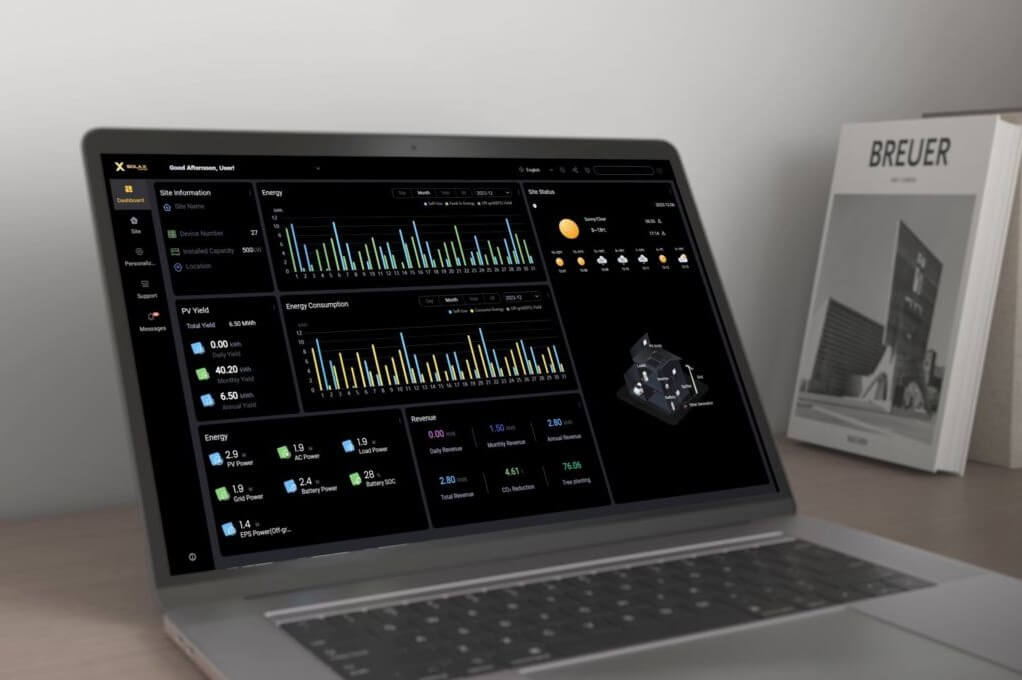
Useful features include panel-level monitoring, fault alerts, remote diagnostics and export control. Check whether monitoring requires a separate gateway, subscription or proprietary device.
Safety, Reliability and Warranty
A microinverter should meet the electrical safety and grid standards required in its market. Compare IP rating, operating temperature, warranty conditions and local support when evaluating solar micro inverter manufacturers.
Which Microinverter Size Do You Need?
Microinverter size should follow the number and electrical characteristics of the connected panels. The examples below are general system categories rather than universal compatibility rules.
Microinverter size | Typical panel configuration | Common application |
300–400W | One panel | Small systems or individual panel expansion |
800W | Two panels | Balcony solar and compact residential systems |
1000W | Two high-power panels | Residential roofs using larger modules |
1200W | Two high-power panels | Higher-output residential installations |
1600–2000W | Four panels | Larger residential or small commercial arrays |
A 300 watt micro inverter or microinverter 400W model normally serves one panel. An 800W microinverter, 1000W microinverter or 1200W microinverter commonly supports two panels, while a microinverter 2000W model is generally designed for four. Always confirm the number of inputs, MPPT allocation and electrical limits in the datasheet.
Best Microinverters for Solar Panels Compared
This table compares popular products by continuous AC output, published efficiency, warranty and system design. Efficiency test methods differ by manufacturer, so the percentages should not be treated as directly equivalent.
Microinverter Model | Maximum AC Output | Published Efficiency | Warranty Length | Key Features |
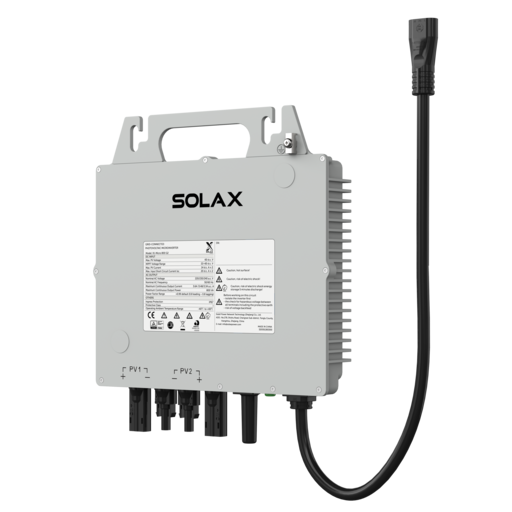
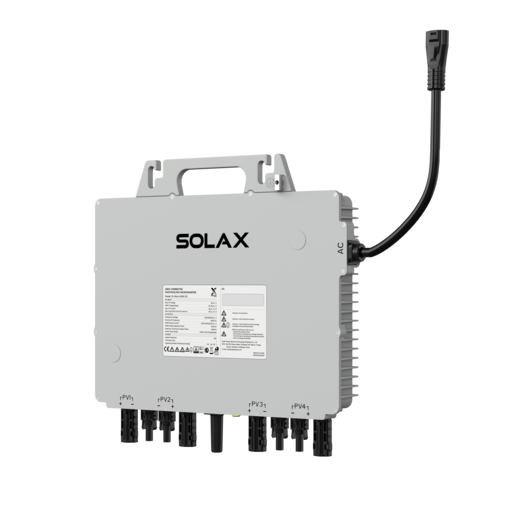
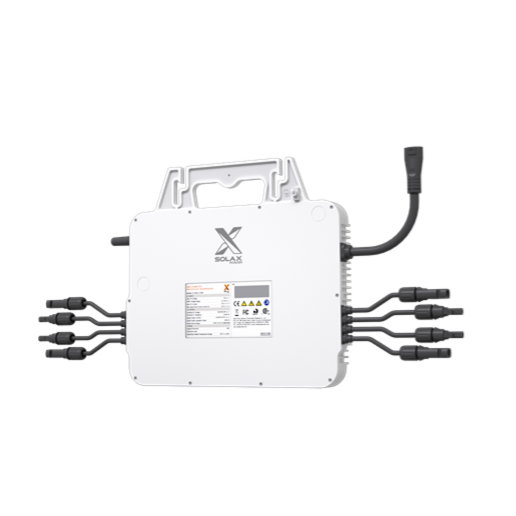
1875 VA / 2000 VA / 2250 VA / 2400 VA | Up to 97% peak | 7 years; extendable to 12 years | Up to four independent MPPTs, support for high-power panels, IP67 protection, built-in communication and SolaXCloud monitoring | |
Enphase IQ8+ Microinverter (MC4) | 290 VA continuous; 300 VA peak | 97% CEC weighted | Up to 25 years | One microinverter per panel; detailed monitoring; strong home-energy ecosystem |
APsystems DS3 Series | 730–960 VA | Up to 97% peak | Up to 25 years | Two panel inputs; two independent MPPTs; Zigbee communication |
HMS-1600&1800&2000-4T | 1600 VA / 1800 VA / 2000 VA | 96.7% CEC peak | 12 years | One-, two- and four-panel models; independent MPPTs; Sub-1G communication |
Output, efficiency and warranty terms vary by model, country and registration conditions. Confirm the applicable datasheet and local warranty before purchasing.
What Are the Best Microinverter Brands?
The leading brands have different strengths. Here I make a simple comparsion for your reference.
SolaX: Best for High-Power Panels and Energy Expansion
SolaX offers 1-in-1, 2-in-1 and 4-in-1 microinverters with outputs up to 2,400 VA. Key advantages include:
Up to four independent MPPTs
Up to 20 A input current per MPPT
IP67 protection and 6,000 V surge protection
AC coupling with battery storage
7-year standard warranty, extendable to 12 years
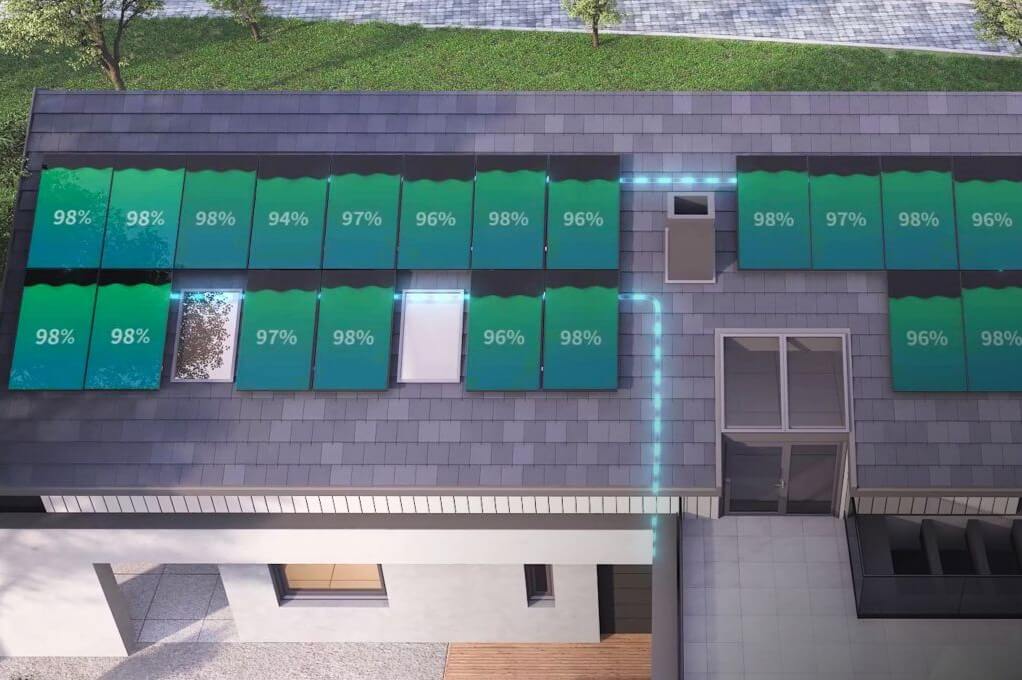
SolaX is particularly suitable for high-power modules, complex rooftops and homeowners who may later add battery storage or a wider energy management system.
Enphase: Best for an Integrated Home-Energy Ecosystem
Enphase uses a 1-in-1 design, giving each panel its own microinverter and monitoring data. Its solar, battery, EV charging and energy monitoring products can be managed through the Enphase platform.
This architecture suits users prioritizing panel-level control, system expansion and compatible backup options. However, using one inverter per panel and additional system equipment can increase the total project cost.
APsystems: Best for Multi-Panel and Commercial Designs
APsystems focuses on microinverters that connect multiple panels to one unit. Its range includes dual-module residential models and native three-phase products for commercial installations.
The multi-panel approach can reduce inverter count, cabling and balance-of-system components. It is a practical option for installers seeking 2-in-1 microinverters or scalable three-phase designs.
Hoymiles: Best for Flexible and Cost-Conscious Projects
Hoymiles offers 1-in-1, 2-in-1 and 4-in-1 models across a broad output range. The HMS Series combines panel-level MPPT, monitoring and Sub-1G communication.
Hoymiles suits residential, balcony and small commercial projects where flexible sizing and competitive cost are priorities. Some systems require a separate DTU gateway for cloud monitoring.
How Much Does a Solar Micro Inverter Cost?
Solar micro inverter price depends on output power, the number of supported panels, monitoring hardware, warranty and local installation costs. A 1-in-1 unit may have a lower purchase price but a higher cost per panel, while a 2-in-1 or 4-in-1 model can reduce inverter count and cabling.
Compare the complete system price rather than the inverter alone. Include gateways, AC trunk cables, connectors, mounting accessories, monitoring subscriptions and labor. For an accurate comparison, calculate both total project cost and cost per connected panel.
Microinverter Solar Kits and Built-In Options
A micro inverter solar kit normally includes panels, microinverters, cables and mounting components selected to work together. A DIY solar panel kit with microinverters can simplify component matching, but grid connection and electrical work must still follow local rules.
Some suppliers also sell solar panels with micro inverters built in, often described as AC modules. These simplify product selection, but buyers should check whether the panel and microinverter warranties are handled separately and whether replacement parts will remain available.
How Do I Choose the Right Microinverter and Brand?
Follow six steps to select the best one.
Step 1: Start With Your Solar Panels
Match the panel's power, voltage and current with the microinverter's permitted input range.
Step 2: Consider Your Roof Layout
Microinverters are most useful on roofs with shading, multiple orientations or panels installed in separate areas. Independent MPPTs limit losses caused by mismatch.
Step 3: Choose 1-in-1, 2-in-1 or 4-in-1
1-in-1: Maximum panel-level independence, but usually a higher equipment cost per panel.
2-in-1: A balance between flexibility and cost.
4-in-1: Fewer inverter units and potentially lower cost per panel for larger systems.
Check that every connected panel has an independent MPPT if the roof has different orientations or shading patterns.
Step 4: Consider Monitoring and Battery Expansion
Compare panel-level data, fault alerts, export control and gateway requirements. If battery storage may be added later, choose a brand with compatible AC-coupled storage or energy management products.
Step 5: Compare Warranty and Local Support
Check standard coverage, extension cost, exclusions, replacement procedures and local technical support. Warranty length alone does not guarantee convenient service.
Step 6: Match the Brand to Your Priorities
Choose Enphase for a one-panel-per-inverter ecosystem, APsystems for multi-panel or three-phase designs, Hoymiles for flexible system sizing, or SolaX for high-power panels, four independent MPPTs and future energy storage expansion.
FAQ
Table of Contents
Latest News
Explore expert insights, practical guides, and the latest news on SolaX Power.



To the Latest Newsletter
Stay Ahead with the Latest SolaX Updates!
Subscribe
I have read and agree to Privacy Policy and User Terms