













December 31, 2025
How to Choose the Best Electric Car Charger for Home
Share my #SolaXStory


As the electric vehicle (EV) revolution accelerates, relying solely on public charging infrastructure is becoming a thing of the past. For most EV owners, the ultimate freedom comes from waking up every morning with a full battery. To achieve this, installing a dedicated home charging station is essential.
However, with so many specifications and brands on the market, finding the right home car charger can be confusing. Should you get a 7kW, 11kW or 22kW unit? How much does installation cost? In this guide, we will walk you through everything you need to know to select the perfect solution for your needs.
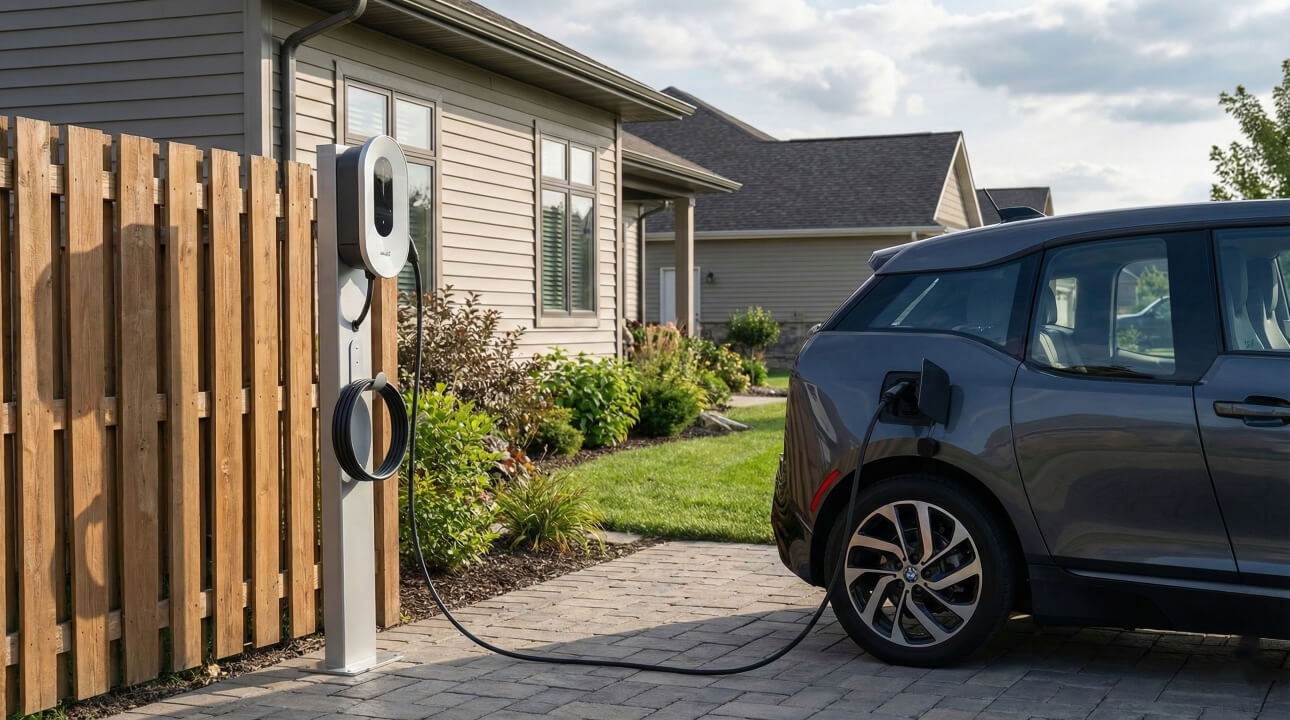
Understanding the Different Types of EV Chargers
Before diving into power outputs, it is crucial to understand the categories of chargers available. Generally, different types of EV chargers are categorized by their charging speed and voltage.
Level 1 vs. Level 2 Home Charger
Level 1 Chargers operate on a standard 120V household outlet and are the slowest option, typically adding only 3 to 5 miles of range per hour. Consequently, fully charging a modern EV can take 40 to 50 hours, making this method practical only for plug-in hybrids or drivers with very short daily commutes.
Level 2 Chargers utilize a 240V power source (similar to a dryer outlet) and are the standard for home wallboxes, fully replenishing most EVs in 4 to 10 hours. They are significantly faster than Level 1, adding approximately 12 to 30 miles of range per hour, making them ideal for efficient overnight charging.
Power Output Guide: 7 kW, 11 kW, or 22 kW?
The next question is power. The speed at which your electric car charger for home operates depends on your home's electrical phase (single-phase or three-phase) and your car's onboard charger capacity.
The Standard Choice: 7kW Car Charger
For the vast majority of homes, especially those with single-phase electricity, a 7kW car charger is the ideal choice.
Performance: It adds about 25-30 miles of range per hour.
Best For: Overnight charging. It can fully charge most EVs in 6-8 hours while you sleep.
Faster Options: 11kW Home Charger & 22kW Home Charger
If your home is equipped with three-phase power, you can unlock faster charging speeds.
11kW Home Charger: This is a popular upgrade for homes with three-phase power. It charges roughly 50% faster than a 7kW unit.
22kW Home Charger: This represents the pinnacle of home charging speed. A 22kW home charger can charge compatible vehicles incredibly fast. However, note: Not all EVs can accept 22kW AC charging. Always check your vehicle's specifications before investing in the highest power output.
How to Select the Best Home EV Charger for Your Needs
Power isn't the only factor. To find the best home EV charger, consider these features:
Tethered vs. Untethered: A tethered charger has a permanently attached cable (convenient), while an untethered unit has a socket (flexible, looks neater).
Smart Connectivity: Look for chargers with Wi-Fi or 4G app control. This allows you to schedule charging during off-peak hours to save money.
Solar Compatibility: If you have solar panels, choose a charger that supports "Solar Only" modes to charge your car with 100% green energy.
Installation Guide: Install EV Charger at Home
Buying the hardware is step one; getting it on your wall is step two. When you plan to install EV charger at home, safety is paramount. This is not a DIY job.
The Installation Process
Professional installation involves assessing your home's load capacity, installing a dedicated circuit breaker, and running heavy-duty cabling from your consumer unit to the charging location.
Cost to Install Electric Car Charger Breakdown
One of the most common questions is about the budget. The cost to install electric car charger varies widely based on your location and home layout.
Hardware Cost: The charger itself typically ranges from $400 to $1,200 depending on features (smart vs. dumb).
Installation Labor & Materials: This can range from $300 for a simple install right next to a fuse box, to over $1,500 if trenching or panel upgrades are required.
Incentives: Always check local government rebates, which can significantly offset the cost to install electric car charger.
Why SolaX is Your Ideal Electric Car Charger for Home
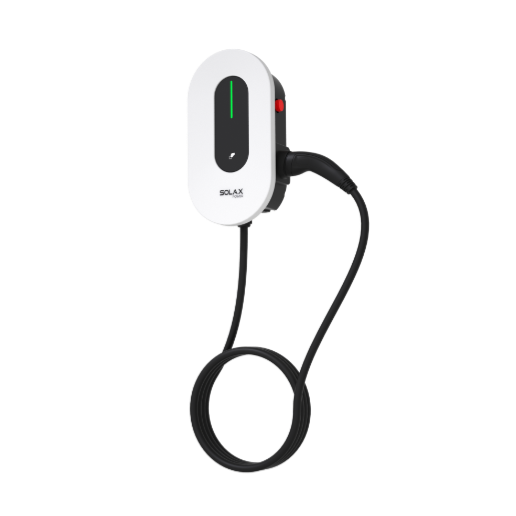
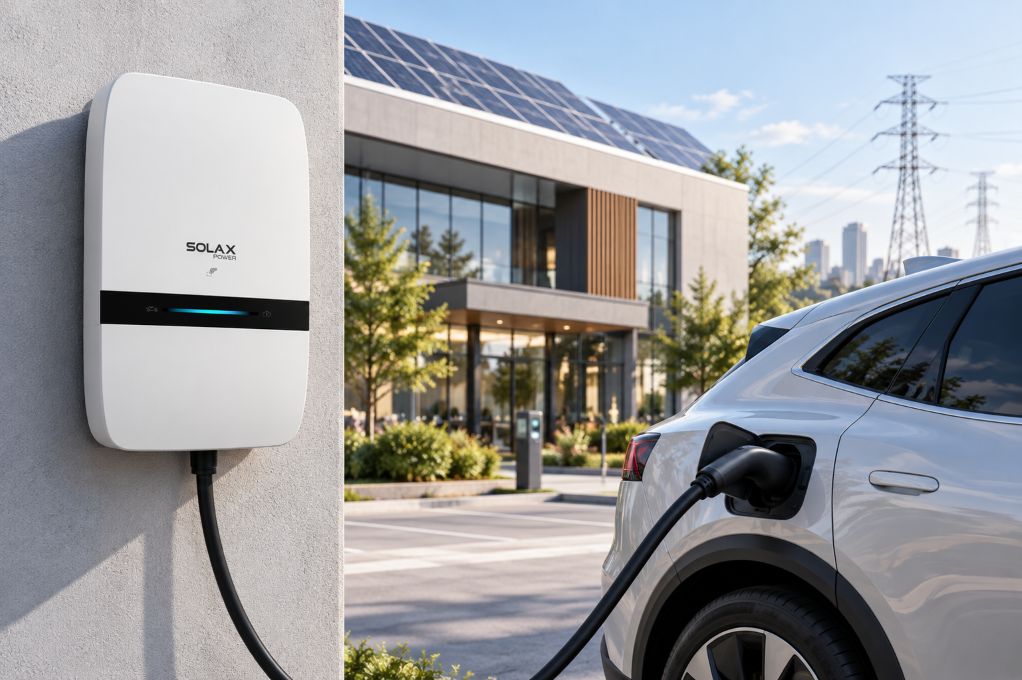
To wrap up our review, if you are looking for a charger that goes beyond simple plug-and-play to offer a fully integrated smart energy solution, the SolaX Smart EV Charger stands out as the market leader.
100% Green Energy Utilization (Green Mode)
Unlike standard chargers, SolaX is designed to work seamlessly with your solar PV system. The intelligent "Green Mode" detects surplus solar energy and uses it to charge your vehicle. This allows you to drive completely on renewable energy, achieving true zero-cost mobility.
Cost-Effective Installation (Built-in PEN Protection)
One of the biggest hidden costs in charger installation is the need for an earth rod. SolaX solves this with integrated PEN protection and Type A RCD protection.
This technology allows for a safe installation without the need for additional earth spikes, keeping your driveway looking clean and significantly lowering installation costs.
Total Home Safety (Dynamic Load Balancing)
Worried about tripping your main breaker? The SolaX charger features advanced Dynamic Load Balancing. It monitors your home’s total energy usage in real-time and automatically adjusts the charging power if you turn on heavy appliances like an oven or HVAC system. It ensures your car charges as fast as safely possible without overloading the grid.
Flexible Control & Savings
Whether you need a quick boost via Fast Mode or want to schedule charging during off-peak hours to save money using the Timer function, the SolaXCloud puts full control in your pocket.
FAQ
Table of Contents
Latest News
Explore expert insights, practical guides, and the latest news on SolaX Power.


To the Latest Newsletter
Stay Ahead with the Latest SolaX Updates!
Subscribe
I have read and agree to Privacy Policy and User Terms