












September 15, 2026
Heat Pump Running Costs: 6 Factors That Affect Electricity Use
Share my #SolaXStory


If you are considering a heat pump system, one of the most common questions is: how much does a heat pump cost to run?
There is no single heat pump running cost figure that applies to every home. Two homes using the same heat pump model can consume very different amounts of electricity because their heat demand, system temperatures and operating conditions are different.
In simple terms:
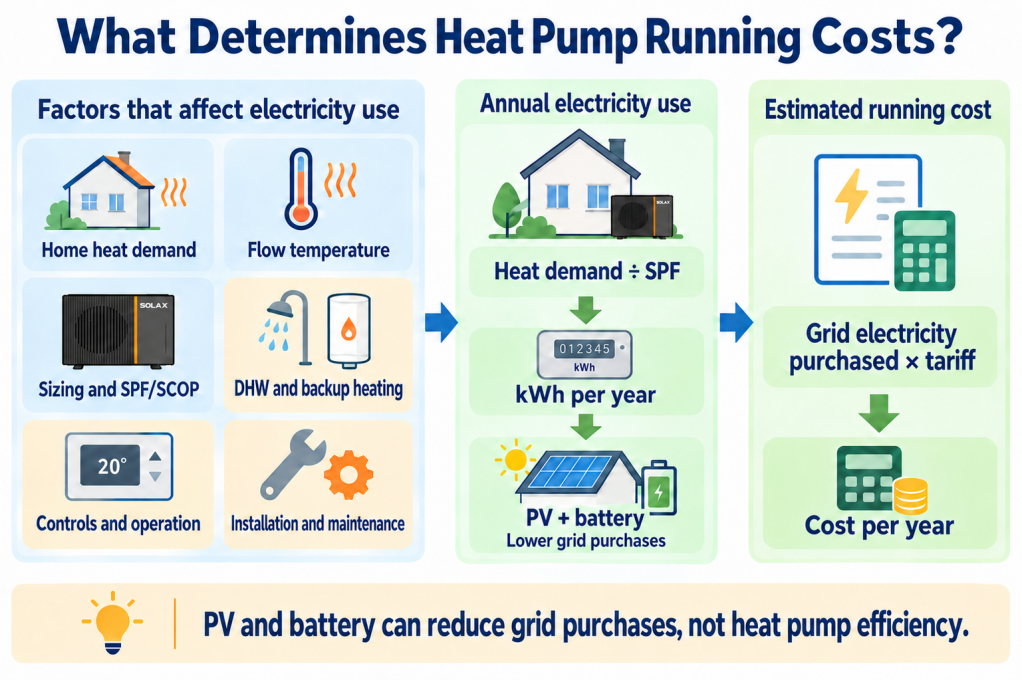
Estimated annual electricity use ≈ annual heat demand ÷ seasonal performance factor (SPF)
Estimated running cost ≈ electricity use × electricity tariff
For example, if a home requires 12,000 kWh of useful heat and the system achieves an SPF of 3, the heat pump would use approximately 4,000 kWh of electricity. Multiply this electricity consumption by the local electricity tariff, then allow for any backup-heater or auxiliary electricity consumption.
The distinction between heat pump electricity use and heat pump running costs is important. A lower tariff reduces the bill, but it does not reduce the number of kilowatt-hours the heat pump uses.
So, how much electricity does a heat pump use, and what determines the final cost? The following six factors have the greatest influence.
1. The home's heat demand
The more heat a building loses, the more energy the heat pump must supply. Heat demand is affected by:
property size and construction
insulation and airtightness
window and door performance
indoor temperature settings
local winter conditions
Improving insulation can reduce electricity use because less heat escapes from the home. However, heat pump capacity should still be selected using a room-by-room heat-loss calculation rather than a simple floor-area estimate.
2. Heating-water flow temperature
The heat pump flow temperature can have a significant effect on heat pump efficiency and electricity use.
An air-to-water heat pump generally works more efficiently when it produces lower-temperature water. Raising the flow temperature makes the compressor work harder, which can increase electricity use.
This is why radiator and underfloor-heating design matters. Emitters with enough surface area can deliver the required room heat at a lower water temperature. Existing radiators may still be suitable, but their output should be checked at the intended heat pump operating conditions.
The flow temperature should not simply be reduced until rooms become cold. It must balance heat pump efficiency with the calculated heat demand and emitter output.
In other words, the aim is to use the lowest suitable heat pump flow temperature that can still meet the home's heating requirements.
3. Heat pump sizing and seasonal performance
Correct heat pump sizing is another major factor affecting electricity consumption and seasonal efficiency.
A correctly sized heat pump should meet the building’s design heat demand at the relevant outdoor and water temperatures.
An undersized unit may rely too heavily on direct electric backup heating during cold weather. A significantly oversized unit may cycle more frequently during milder conditions. Both can increase electricity use if the overall system is not designed and controlled correctly.
When comparing heat pumps, look beyond a single COP value. COP is a snapshot of performance at one test condition. SCOP compares products under standardised seasonal conditions, while a project-specific seasonal performance estimate gives a better indication of likely electricity use in a particular home.
4. Domestic hot water and backup heating
Domestic hot water can also have a noticeable impact on heat pump energy consumption.
Heating domestic hot water usually requires a higher water temperature than space heating. Electricity use can therefore be affected by:
Household hot water consumption
Hot water cylinder size
Hot water temperature setpoint
Reheating schedule
Immersion-heater operation
Backup-heater settings
Electric immersion heaters and other direct electric backup heaters consume electricity directly. If they activate more often than necessary, they can noticeably increase heat pump running costs.
For this reason, a realistic estimate of annual heat pump electricity consumption should consider both space heating and domestic hot water, together with any auxiliary or backup heating.
5. Heat pump controls and everyday operation
How you operate a heat pump can affect both comfort and energy consumption.
Heat pumps often work most efficiently by maintaining a relatively steady indoor temperature while circulating lower-temperature water for longer periods.
Repeatedly switching the heat pump off and then demanding rapid reheating may require higher heating output and, depending on the system design and controls, could activate backup heating.
Correct settings for heating schedules, weather compensation and temperature control can therefore help improve heat pump efficiency.
Rather than treating a heat pump exactly like a traditional boiler, the controls should be configured around the operating characteristics of the heat pump and the building's heat demand.
6. Heat Pump installation and maintenance
Electricity use can rise when the system has poor water flow, trapped air, blocked filters, restricted outdoor airflow, incorrect sensors or unsuitable control settings.
Good heat pump installation and commissioning should verify flow rate, system temperatures, pump operation, controls and backup-heater settings. The outdoor heat exchanger and air path should also remain clear of leaves and debris, with maintenance completed according to the manufacturer's instructions.
FAQ
Table of Contents
Latest News
Explore expert insights, practical guides, and the latest news on SolaX Power.



To the Latest Newsletter
Stay Ahead with the Latest SolaX Updates!
Subscribe
I have read and agree to Privacy Policy and User Terms