



















September 15, 2026
Can a Heat Pump Work with Your Existing Heating System?
Share my #SolaXStory


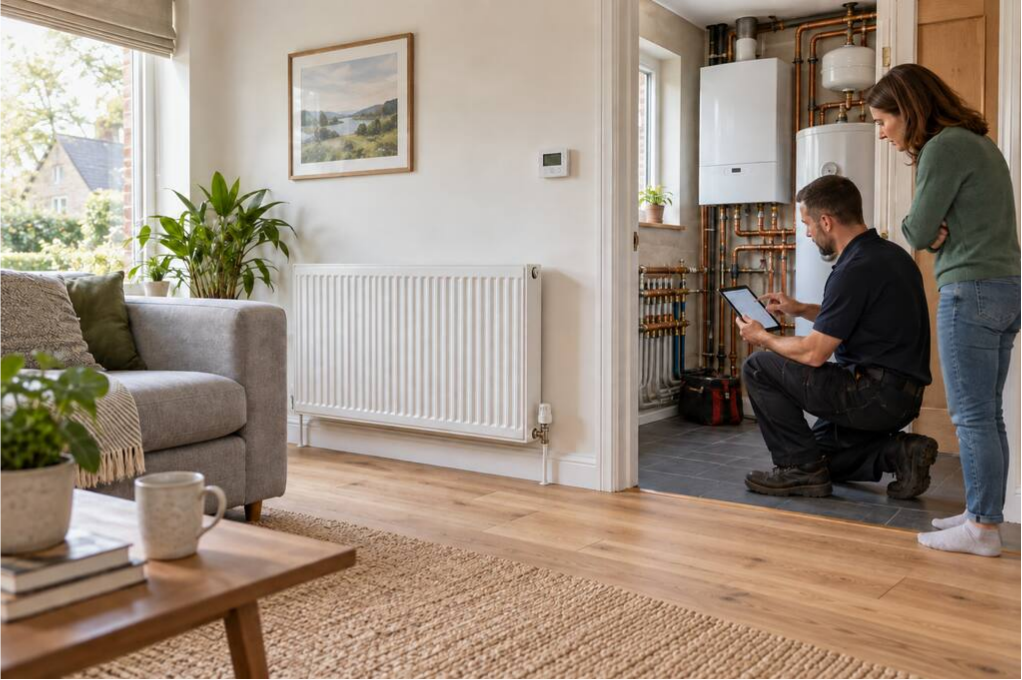
Often, yes—at least in part. A heat pump retrofit can reuse existing radiators, underfloor heating and water-based pipework when they are suitable for the proposed operating conditions. The aim is to identify what can stay, what needs adjusting and what should be upgraded.
Heat pumps generally operate more efficiently at lower flow temperatures than traditional boiler systems. Compatibility therefore depends on whether your home can receive enough heat at the planned water temperature, rather than simply whether the new unit fits where the old boiler was installed.
What Parts of Your Existing Heating System Can Be Reused?
An air to water heat pump retrofit uses water to distribute heat through the home. Many existing components may remain, but each needs to be assessed as part of the complete system.
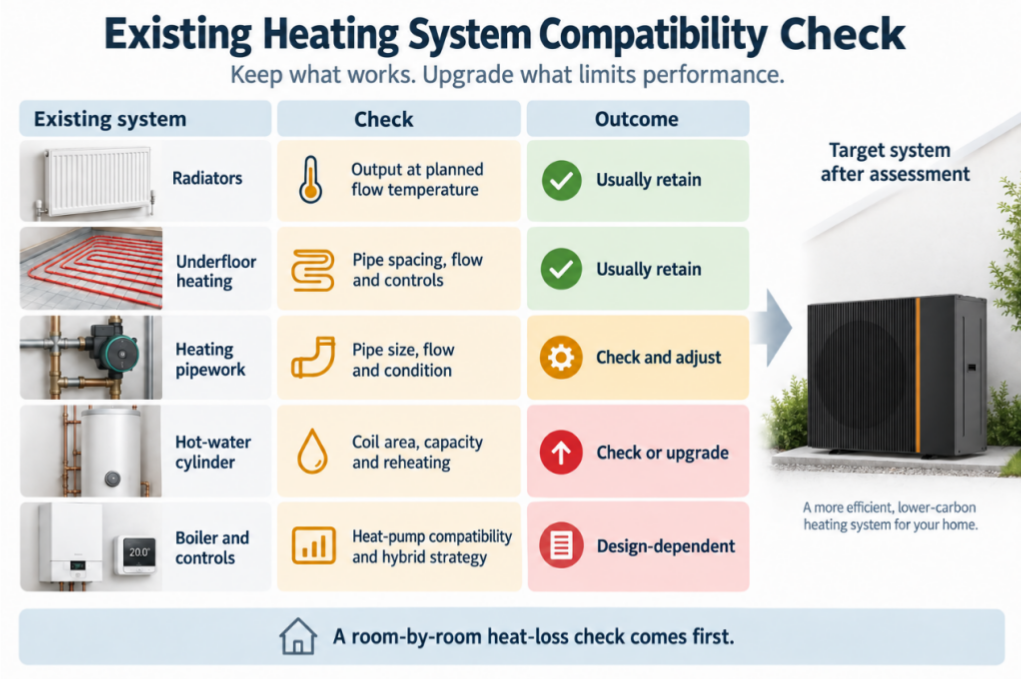
Existing component | Can it usually be retained? | What must be checked? |
Radiators | Sometimes | Output at the proposed flow temperature |
| Often | Often | Pipe spacing, floor output, flow rate and controls |
| Sometimes | Sometimes | Pipe diameter, condition and required water flow |
| Sometimes | Sometimes | Coil area, capacity and reheating performance |
Thermostats and controls | Partly | Compatibility with heat pump and weather compensation |
Existing boiler | In a hybrid design | Control strategy, hydraulic design and project objective |
This overview is a starting point. An existing component should be retained only when its condition and performance meet the requirements of the proposed design.
Can Existing Radiators and Underfloor Heating Work with a Heat Pump?
Existing radiators
Replacing every radiator is not automatically necessary. A radiator produces less heat with lower-temperature water, but it may still be large enough if it was previously oversized or the room has a low heat demand.
The installer should compare each room’s calculated heat loss with radiator output at the proposed flow, return and room temperatures. Radiator dimensions alone are not enough. Where output is insufficient, options include a higher-output radiator, an additional emitter, a fan-assisted radiator or targeted insulation improvements.
Existing underfloor heating
Underfloor heating is often a good match because its large surface area can heat a room with relatively low-temperature water. Existing circuits still need checks for pipe spacing, floor construction, floor coverings, water flow, manifold arrangement and controls.
A bathroom circuit designed only to warm the floor may not meet the room’s full heating demand. Radiators and underfloor heating can also operate together, provided the water temperatures, pumps and controls are designed for both.
Can Existing Pipework and Hot Water Systems Be Reused?
Heating pipework
Existing pipes can often be retained. However, a heat pump may require a higher water flow rate than a boiler to deliver the same heat output with a smaller temperature difference between flow and return. The installer should check:
Pipe diameters, routes and whether the system has a one-pipe or two-pipe arrangement.
Pressure losses and the available water flow through the complete circuit.
Pipe condition, cleanliness and insulation in outdoor or unheated areas.
Some smaller pipes, particularly the main connections to the heat pump, may need upgrading. Retained pipework should be cleaned, filled and treated according to the product and system requirements before commissioning.
Hot water storage
A cylinder designed for a boiler is not automatically suitable for a heat pump. Its heat exchanger must transfer enough heat at the proposed operating temperatures; this often requires a larger coil area. Storage capacity, condition, heat loss and reheating time also need to match household demand.
An unsuitable cylinder may be replaced with a heat-pump-compatible cylinder or an integrated indoor unit combining hot water storage and hydraulic components. If the existing system has no cylinder, space for the proposed hot water equipment needs to be included in the design.
Should You Keep Your Existing Boiler?
Keeping the boiler is possible in a deliberately designed hybrid system. The heat pump may cover much of the annual heating demand, while the boiler assists under defined conditions or serves a separate demand.
The designer should specify when each heat source operates, how they connect hydraulically and how the controls coordinate them. Retaining the boiler is not automatically the most efficient or economical choice: it should support the project’s running-cost, comfort and emissions goals.
What Usually Needs Upgrading for a Heat Pump?
The required work depends on the property. A retrofit air source heat pump project may involve:
Selected radiators or other emitters with insufficient output at the planned water temperature.
Restrictive pipe sections, circulation pumps or hydraulic components.
A hot water cylinder that cannot provide suitable heat-transfer performance.
Thermostats and controls, including compatibility with weather compensation.
Electrical supply arrangements and the outdoor unit’s base, drainage and pipe insulation.
Heat pump retrofit cost depends on the extent of these changes as well as the equipment and installation work. Ask for an itemised quotation that separates the heat pump, hot water equipment, emitter upgrades, pipework, electrical work and commissioning. A low equipment price alone does not show the full project cost.
What Else Needs to Be Checked Before Installation?
The building and installation location matter as much as the existing heating equipment. A survey should confirm:
Building heat loss: the heat needed by each room at the local outdoor design temperature.
Outdoor space: suitable airflow, drainage, noise considerations and maintenance access.
Indoor space: room for hot water storage and any required hydraulic equipment.
Electrical capacity: whether the supply can support the selected system and any auxiliary heating.
Control strategy: how zones, pumps and any retained boiler will work together.
These checks help identify practical constraints before equipment is ordered and allow necessary upgrades to be included in the installation plan.
How to Check Compatibility Before Choosing a Heat Pump?
Start with a property survey and a room-by-room heat-loss calculation. The installer can then check emitter output, pipework flow and hot water performance at the proposed operating temperatures, and identify which components can be retained.
Choose the heat pump using its available output at the project’s outdoor design temperature and required water temperature—not nominal capacity, floor area or the existing boiler rating alone. Compare the complete installation scope and expected annual running costs before deciding.
A successful retrofit starts with a clear assessment of your existing system. Ask a qualified installer for a written compatibility review and an itemised upgrade plan before selecting equipment.
FAQ
Table of Contents
Latest News
Explore expert insights, practical guides, and the latest news on SolaX Power.





To the Latest Newsletter
Stay Ahead with the Latest SolaX Updates!
Subscribe
I have read and agree to Privacy Policy and User Terms