













October 09, 2026
Latin America's Rooftop Solar Rules Are Changing — Where SolaX Microinverters Fit in 2026
Share my #SolaXStory


Mexico has widened the space for distributed generation. Brazil is moving deeper into a new compensation regime. Chile is asking more of inverter hardware. None of these changes amounts to a "microinverter policy," but together they are changing how rooftop PV is designed, approved and operated across Latin America.
There is a tendency to talk about Latin America as one solar growth market. At rooftop solar PV level, that is becoming less useful. The rules are diverging: capacity thresholds in one country, compensation in another, equipment-level compliance somewhere else.

For solar microinverters , the opportunity is therefore uneven — and that is the more interesting story.
Mexico: more room for distributed generation, but not a residential revolution
Mexico's 2025 Electricity Sector Law defines distributed generation as plants below 0.7 MW. Plants at or above 0.7 MW fall into the generation-permit framework, while sub-0.7 MW distributed generation remains permit-exempt.
The number is eye-catching, but it needs context. A residential microinverter system is nowhere near 700 kW. The change matters more because it gives distributed generation a wider regulatory envelope, particularly for commercial projects that may grow beyond the scale usually associated with a home rooftop.
Mexico already had around 4.45 GW of cumulative distributed-generation capacity in 2024, more than 99% of it solar PV. That is a substantial base. Yet a higher legal ceiling does not remove the practical work of interconnection, local grid assessment or equipment compliance. It creates room; it does not guarantee demand.
Brazil: compensation is changing the design conversation
Brazil is a different case. ANEEL defines distributed microgeneration as systems up to 75 kW, and the SCEE allows surplus generation to be injected into the grid and converted into credits.
For projects under the transition provisions of Law 14.300, however, the share of TUSD Fio B applied to compensated energy rises to 60% in 2026, from 45% in 2025. It is scheduled to reach 75% in 2027 and 90% in 2028.
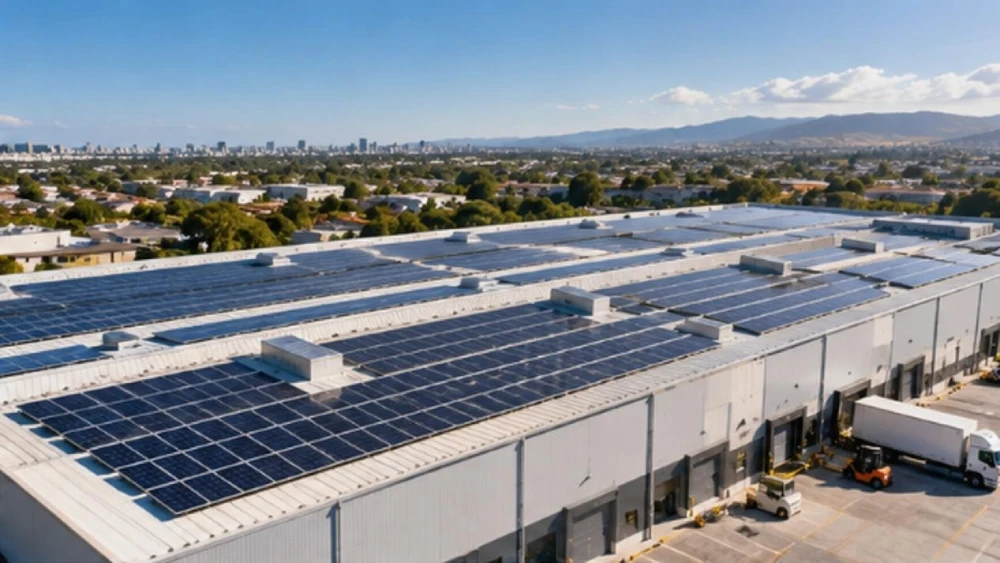
It is tempting to reduce this to "self-consumption is better than export." The economics are not that clean. Tariff class, connection date, load profile and the rules applying to a particular project all matter.
Still, Brazil is pushing installers to ask a different set of questions about solar array design. How much electricity will actually be used during solar hours? Is the array being sized for annual production or for the customer's load? What happens if storage is added later?
That does not automatically favor microinverters. A large, simple, unshaded roof may still be better served by a string inverter. The policy shift makes system design more important; it does not choose the architecture.
Chile: the rules are reaching the inverter
Chile is perhaps the most relevant market in this discussion because its technical rules explicitly address microinverters.
The country's distributed-generation-for-self-consumption framework covers systems up to 300 kW. SEC's RGR No. 02/2024 goes further, requiring grid-connected microinverters to meet IEC 62109-1 and IEC 62109-2 or UL 1741 safety requirements, provide anti-islanding protection under IEC 62116, and be authorized by the SEC. The instruction also gets into installation details, including clearances, weather exposure and AC connections.
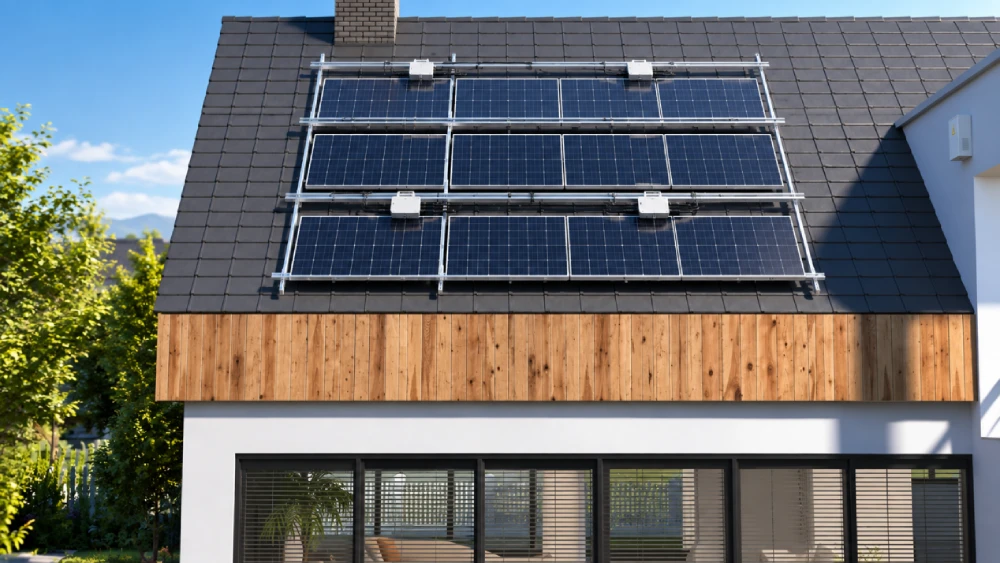
Since January 1, 2026, the SEC has also required inverters used in new TE-4 declarations to have authorized AFCI protection compliant with IEC 63027 or UL 1699B. An external authorized AFCI can be used through the special-project route.
This is more consequential for an inverter supplier than another national solar target. A product can have competitive efficiency and pricing and still be irrelevant to an installer if it does not have the required local authorization.
In Chile, compliance is part of the product proposition, not a footnote to it.
Colombia and Argentina: expanding frameworks for distributed energy
Colombia and Argentina are widening distributed energy in different ways.
Colombia's CREG Resolution 101 072 of 2025 brought energy communities into a clearer regulatory framework, with collective self-generation and collective distributed generation below 5 MW, subject to geographic and distribution-system conditions.
Argentina revised its User-Generator regime in 2025. It now distinguishes small systems up to 3 kW, medium systems above 3 kW and up to 300 kW, and larger user-generators above 300 kW and up to 12 MW. Community and virtual-community arrangements are also recognized.
Neither change should be read as a direct incentive for microinverters. A larger legal market is not necessarily a larger residential market. Financing, retail tariffs, installer networks and distributor procedures can still decide what gets built.
That is the broader regional pattern. Distributed solar has more room to operate, but the route to market is becoming more technical and more local. There is no obvious "Latin America is going micro" conclusion here.
SolaX Microinverters: built for a market that is hard to standardize
That fragmented backdrop is where the SolaX microinverter proposition becomes relevant.
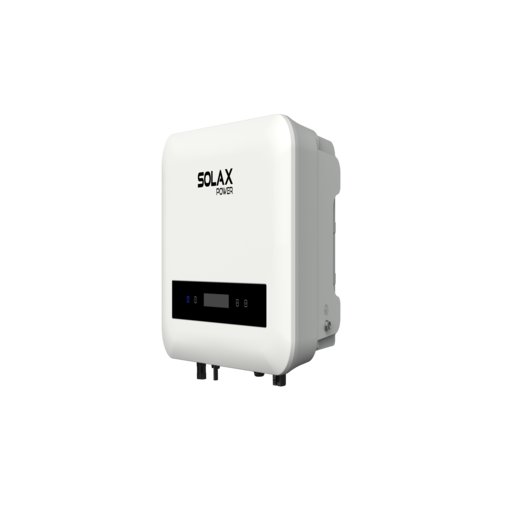
| Model Series | Power Rating | MPPT Channels | Key Applications |
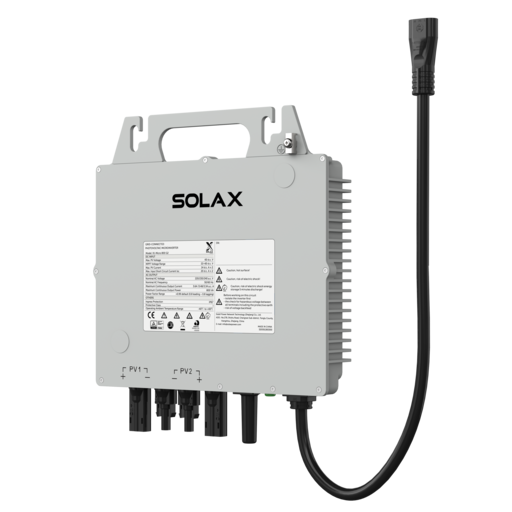
X1-Micro 2 in 1 G2 | 800 VA / 1000 VA / 1200 VA | 2 Independent MPPTs | Compact residential roofs, high-wattage panel pairs |
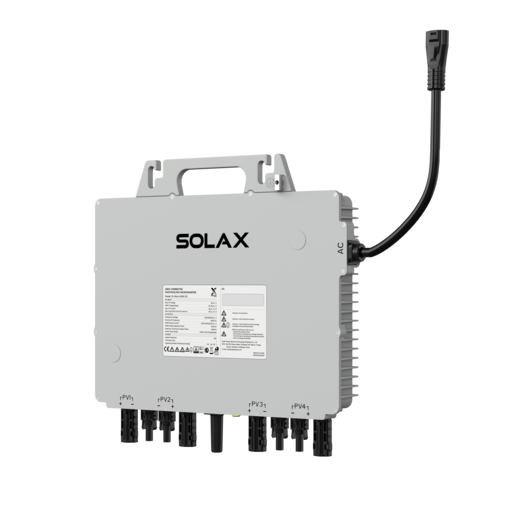
X1-Micro 4 in 1 G2 | 1875 VA to 2400 VA | 4 Independent MPPTs | Complex multi-orientation roofs, light commercial arrays |
The specifications are useful, but modularity is the stronger argument for this region.
Residential roofs are rarely uniform. Modules may face different directions, shading can move across the array, and usable roof area may be split into small sections. Customer demand also changes. Someone who starts with a modest PV system may add panels, an EV or storage several years later.
With multiple microinverters operating in parallel, capacity can be added in smaller steps. Independent MPPT channels also reduce the extent to which modules under different conditions have to behave as one string. That flexibility is relevant where installers cannot assume that the system designed today will still be the right size tomorrow.
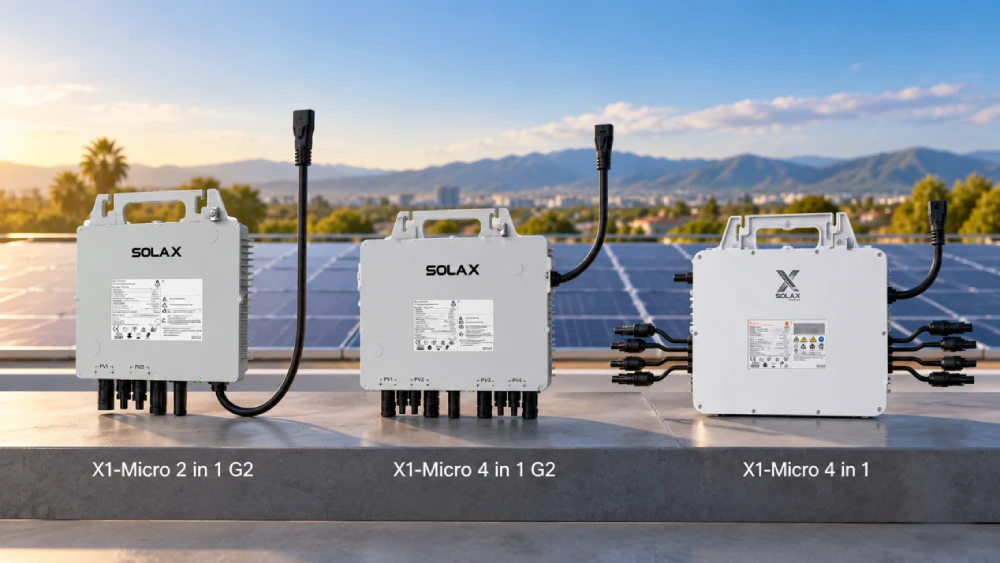
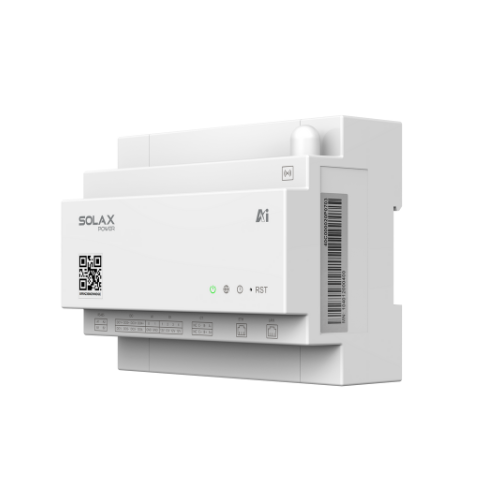
There is another layer. SolaX's X1-Micro platform supports AC coupling, leaving a route toward storage later. Zero-export control is also available with the appropriate SolaX control setup; SolaX specifies the ECC when zero-export control or interaction with external devices is required.
Brazil helps explain why that matters. As compensation economics change, installers have more reason to think about what happens to surplus solar. Chile makes a different point: functionality is useful only if the product also satisfies local authorization and protection requirements.
Microinverters are not the answer to every roof. More module-level electronics also change the service equation, and on a simple roof the economics of a string inverter may remain difficult to beat. SolaX still has to win market by market, certification by certification.
Navigating the 2026 Latin American Rooftop Solar Market
Latin America's rooftop market is growing up rather than simply growing. Regulation is becoming more specific, compensation more nuanced and system design harder to separate from local grid rules.
For SolaX, that leaves a useful position without requiring an exaggerated claim. A modular, module-level architecture has more places to make sense when roofs, loads and rules do not stay fixed.
In the 2026 Latin American solar landscape, flexibility matters precisely because the rules are not standing still.
Table of Contents
Latest News
Explore expert insights, practical guides, and the latest news on SolaX Power.





To the Latest Newsletter
Stay Ahead with the Latest SolaX Updates!
Subscribe
I have read and agree to Privacy Policy and User Terms