












November 13, 2026
UK Best 7 Residential Hybrid Inverters for Local Grid Requirements
Share my #SolaXStory


Start with the grid connection route
A final design needs approved equipment, correct metering and DNO acceptance where required. GOV.UK notes that G98 notification may apply after installation, while G99 or G100 applications may be needed before installation for larger or export-limited schemes. This is a supplied-product shortlist: regional models are not automatically suitable for a UK solar installation.
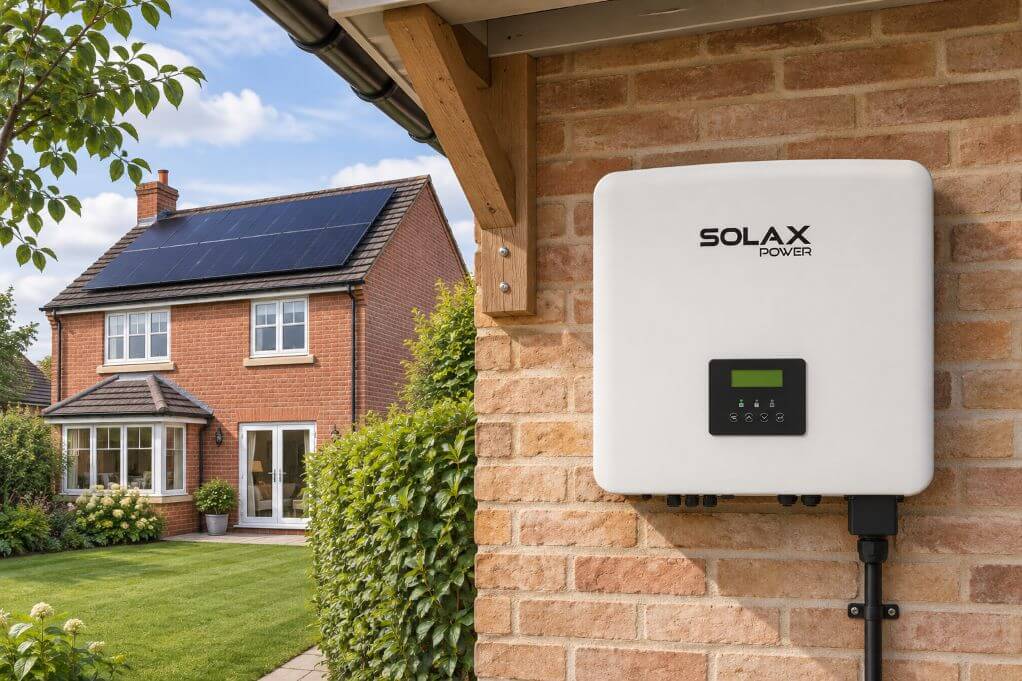
Seven SolaX hybrid inverter options by installation scenario
1. Large three-phase resilience
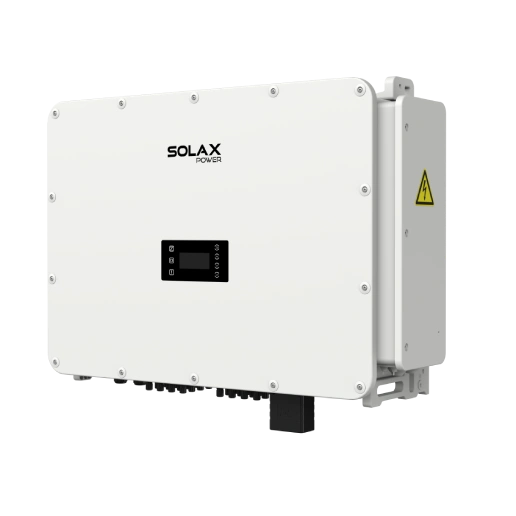
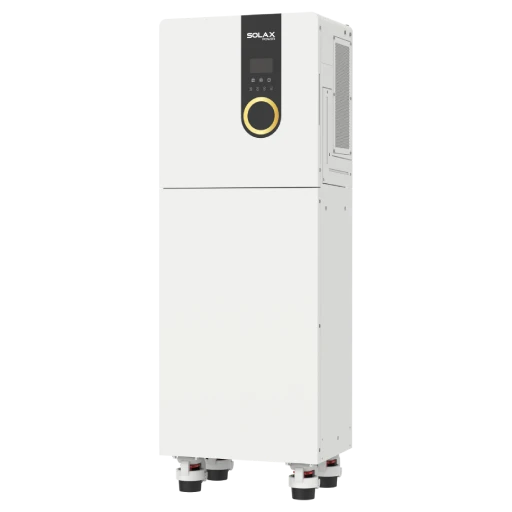
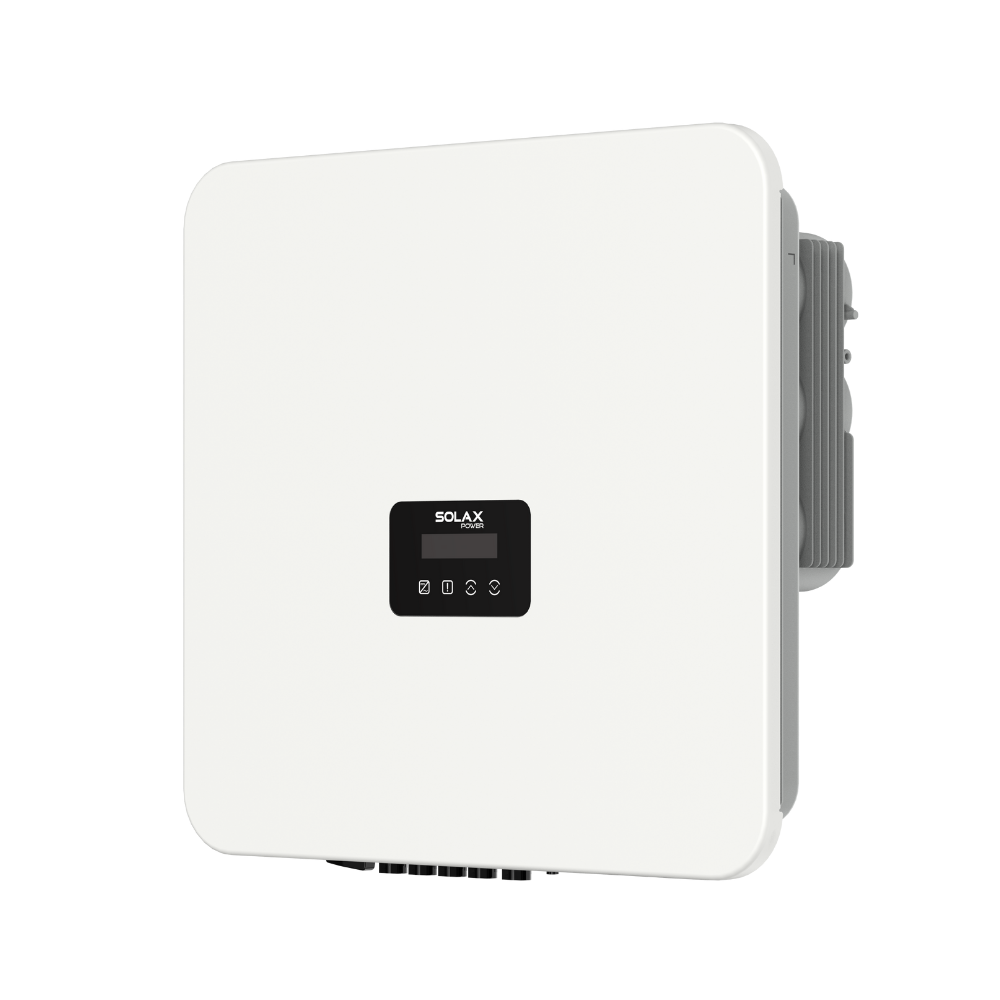
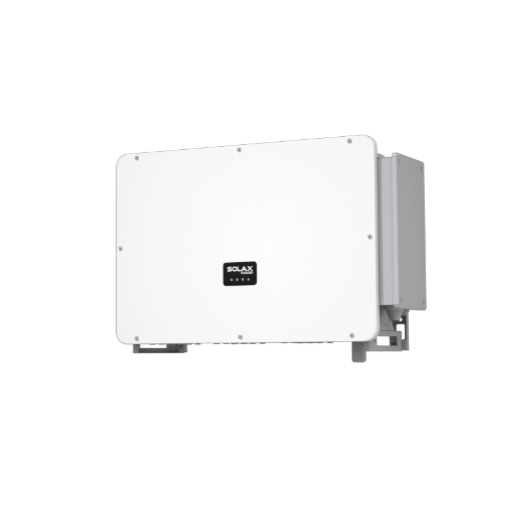
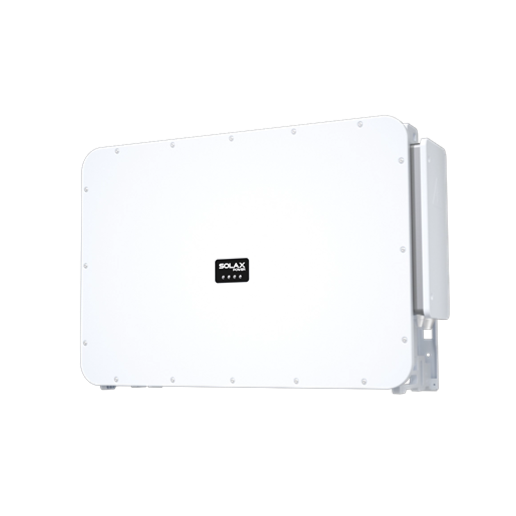
SolaX X3 Ultra is for substantial three-phase homes, annexes or properties with high-load backup plans. Its 15–30 kW range is considerably larger than a typical residential solar inverter, so the site supply, connected loads and DNO route must justify it.
Up to 10 units can operate in parallel for on-grid or off-grid designs.
Supports 200% PV oversizing, 60 A maximum charging/discharging and microgrid or generator functions.
EPS changeover is under 10 ms for a single unit.
Suitable fit: complex three-phase solar energy storage systems rather than a routine home battery storage UK installation.
2. Existing three-phase PV retrofit
X3 Retro Fit available in 6–15 kW models.
Supports lithium-ion and lead-acid batteries, five work modes and two charging periods.
Provides unbalanced three-phase output, with up to 5 kW on one phase.
Parallel capability reaches 150 kW; battery chemistry, communications and export control still need installer verification.
3. Flexible solar and battery expansion
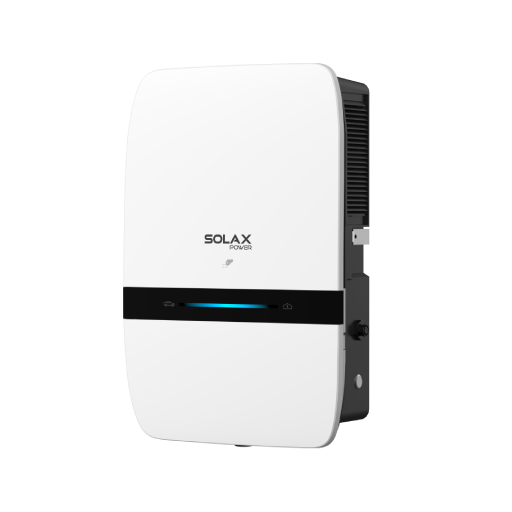
SolaX X3 Hyb G4 Pro suits three-phase households with several roof orientations, planned solar battery growth and time-of-use tariff schedules. It is an integrated hybrid inverter rather than a retrofit-only arrangement.
4–15 kW range with three MPPT trackers and a 110–950 V MPPT range.
Dual battery ports and a 2-in-1 expansion function support staged battery planning.
Smart Schedule, Smart Scene and 24-hour time-of-use controls support smart energy management.
V2X readiness is not the same as commissioned V2X operation; compatible equipment and configuration remain essential.
4. Balanced three-phase control
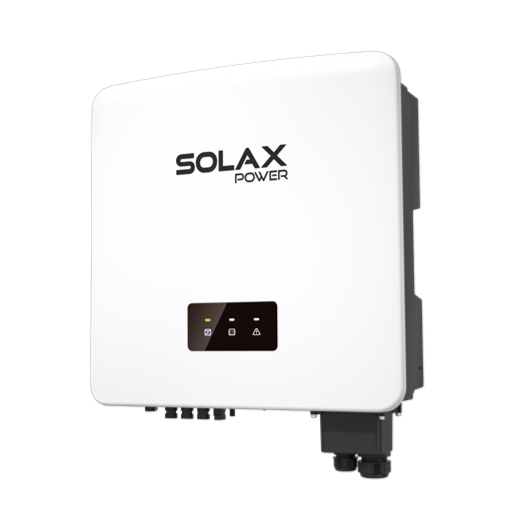
SolaX X3 Hybrid G4 fits homes combining solar energy, battery storage and controllable demand such as a heat pump or smart EV charger. It is the more straightforward choice where triple-MPPT input and dual-battery expansion are not central requirements.
Available from 5–15 kW.
Supports 200% PV oversizing and up to 150 kW parallel operation.
Provides global MPP scanning and time-of-use energy management.
Can supply up to 5 kW of unbalanced output per phase, subject to the final electrical design.
5. Future-focused single-phase design
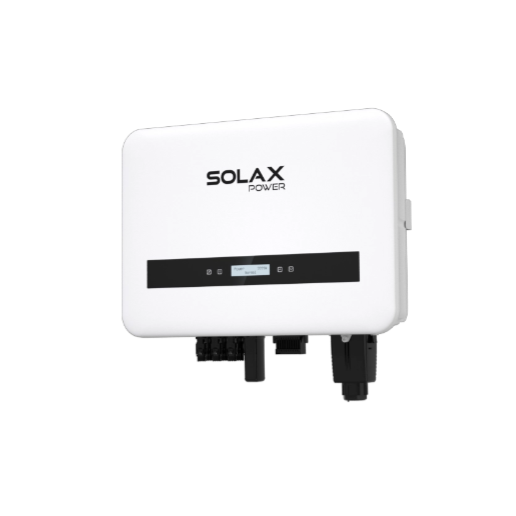
SolaX X1 Vast is aimed at qualifying single-phase residential solar systems that need multiple PV inputs, battery expansion and planned backup. Confirm UK certification, firmware, metering and approved export settings before specification.
5–10 kW output range, with up to four MPPT trackers and 20 A input per tracker.
Dual battery ports and 2-in-1 expansion support phased solar battery storage.
Supports 200% PV oversizing, microgrid/generator operation and under-10 ms EPS switching.
V2G/V2H functions are readiness features; installed capability depends on the completed system.
6. Battery-first solar retrofit
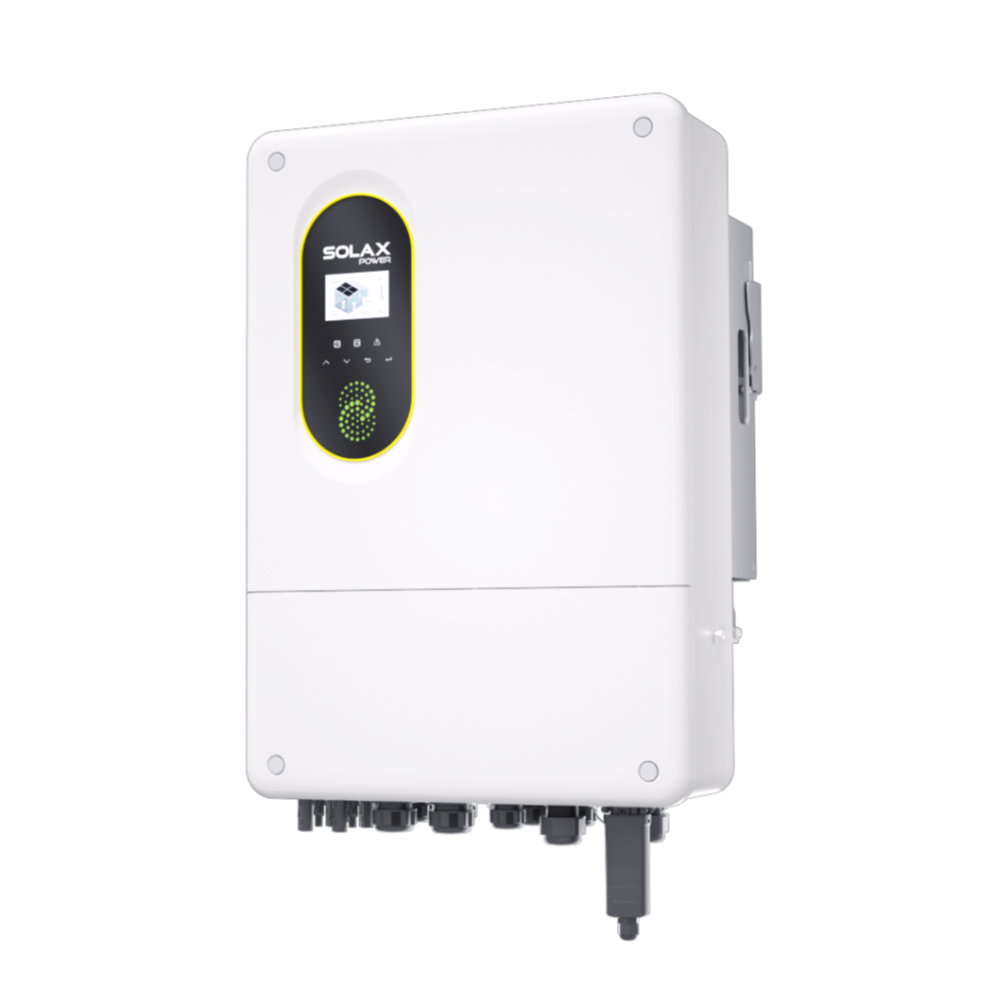
SolaX X1-AC is an AC-coupled option for retaining an existing solar inverter while adding home battery storage. In plain terms, the existing PV inverter continues to manage the panels, while this unit manages compatible battery charging and discharge.
3–5 kW product range.
Compatible with high-voltage batteries.
Natural cooling supports quiet operation with lower maintenance needs.
Up to 97% efficiency and IP65 protection; compatibility is not universal, so confirm the existing inverter and battery combination.
7. Split-phase reference only
SolaX X1 Split is a regional split-phase model, not a standard UK recommendation. It is designed for 120/240 V split-phase output and is presented for the Latin American market, which differs from typical UK single-phase and three-phase arrangements.
Available in 3–7 kW variants.
Supports two-unit parallel operation and five operating modes.
Offers under-20 ms switchover and two charging periods.
Consider it only for a specialist, installer-confirmed application with all required approvals.
Select a hybrid inverter around the completed system
Match supply type and DNO route
Confirm whether the property has single-phase or three-phase supply, the planned generation capacity and whether export limiting is necessary. The Energy Networks Association explains that G98 and G99 govern generation connected in parallel with public low-voltage networks, while G100 addresses export and import limitation schemes. Check current device compliance records and DNO requirements rather than relying on a model name alone.
Define the backup boundary
List the circuits that must run in an outage: for example, lighting, refrigeration, broadband and selected sockets. Then calculate continuous and starting loads, EPS output and battery capacity. Whole-home backup may require a different design from critical-load backup.
Choose the architecture early
Integrated hybrid systems: X3-ULTRA, X3-HYB G4 PRO, X3-HYBRID G4 and X1-VAST.
AC-coupled retrofits: X3 FIT G4 and X1-AC.
Phased solar battery expansion: prioritise battery ports, approved capacity and communications compatibility.
Tariff control: programme charging windows only after metering, time settings and commissioning are correct.
Commissioning checks that prevent common faults
Problem | Likely cause | Practical fix |
Export exceeds the agreed limit | Meter orientation or settings are incorrect | Recommission export control and test fail-safe operation. |
Battery ignores its schedule | Tariff windows or operating mode are wrong | Check time, charging periods and battery mode. |
EPS circuits trip in an outage | Backup demand exceeds the design | Move non-essential circuits outside the backup supply. |
Monitoring is incomplete | Meter, network or account setup is unfinished | Verify communications and commissioning records. |
The right solar inverter depends on phase supply, existing solar PV, critical-load expectations, battery expansion plans and the DNO connection route. Discuss the selected SolaX model with an appropriately qualified installer before purchase or installation, particularly where export limitation, a solar EV charger or backup circuits are included.
FAQ
Table of Contents
Latest News
Explore expert insights, practical guides, and the latest news on SolaX Power.



To the Latest Newsletter
Stay Ahead with the Latest SolaX Updates!
Subscribe
I have read and agree to Privacy Policy and User Terms